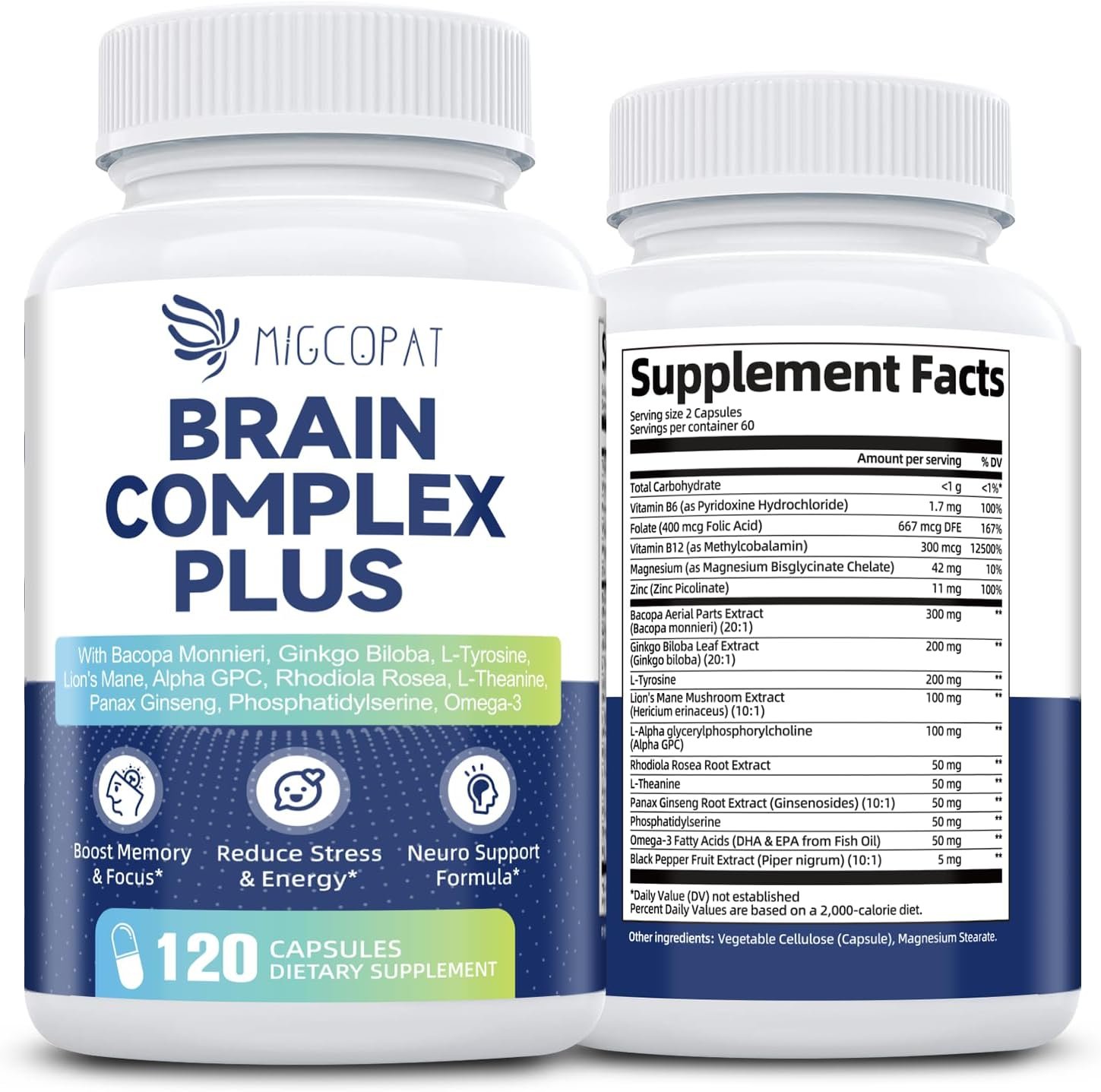
Migcopat’s Memory and Focus supplement may suit shoppers who want a multi-ingredient capsule, but the listing alone doesn’t establish that it improves cognition; it specifies capsules and names ingredients with amounts. The listing’s benefits are manufacturer claims, not verified results. Price, buyer-review information, serving directions and product-specific clinical testing aren’t available here.
- The listing identifies Migcopat and specifies capsules.
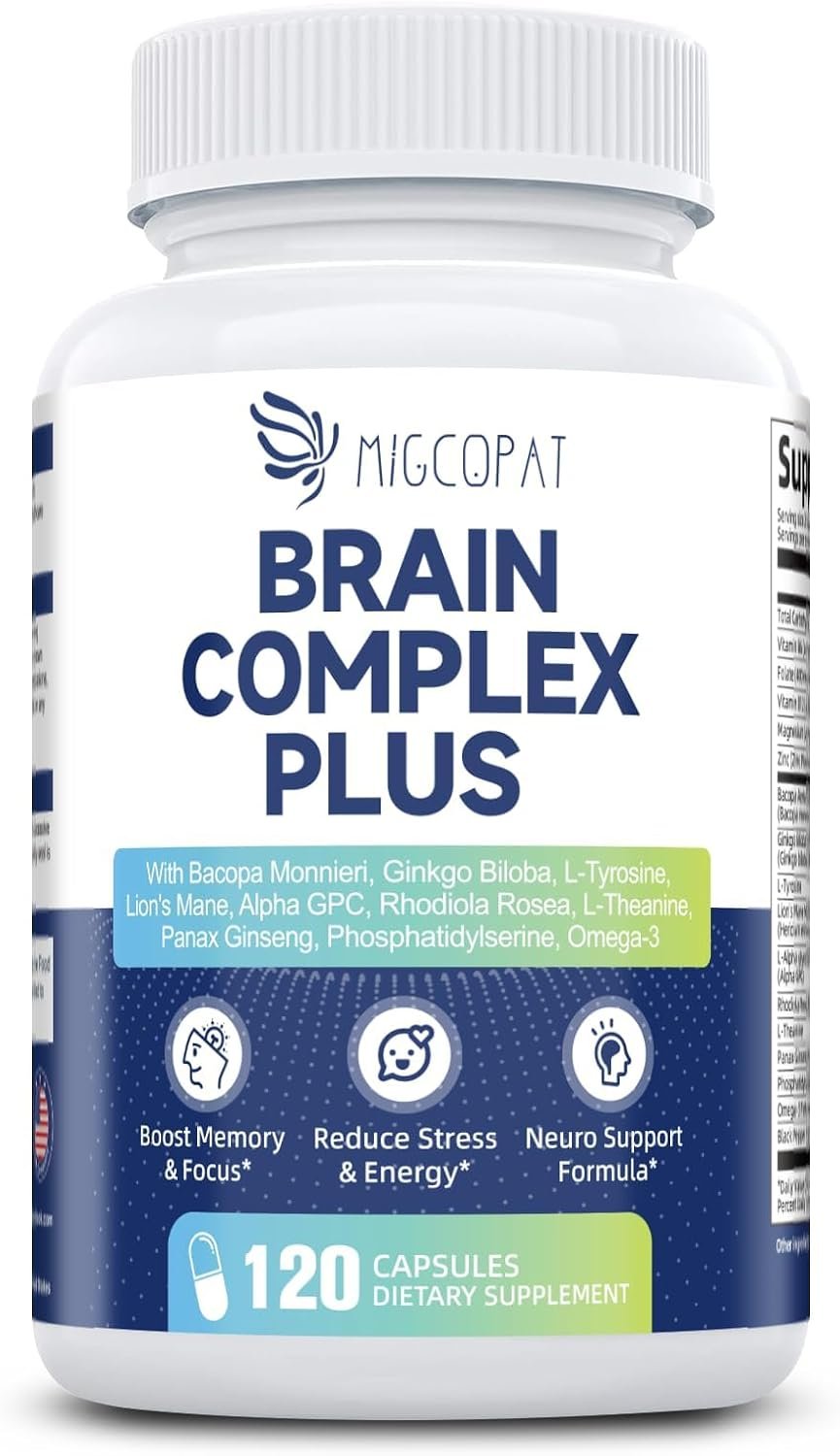
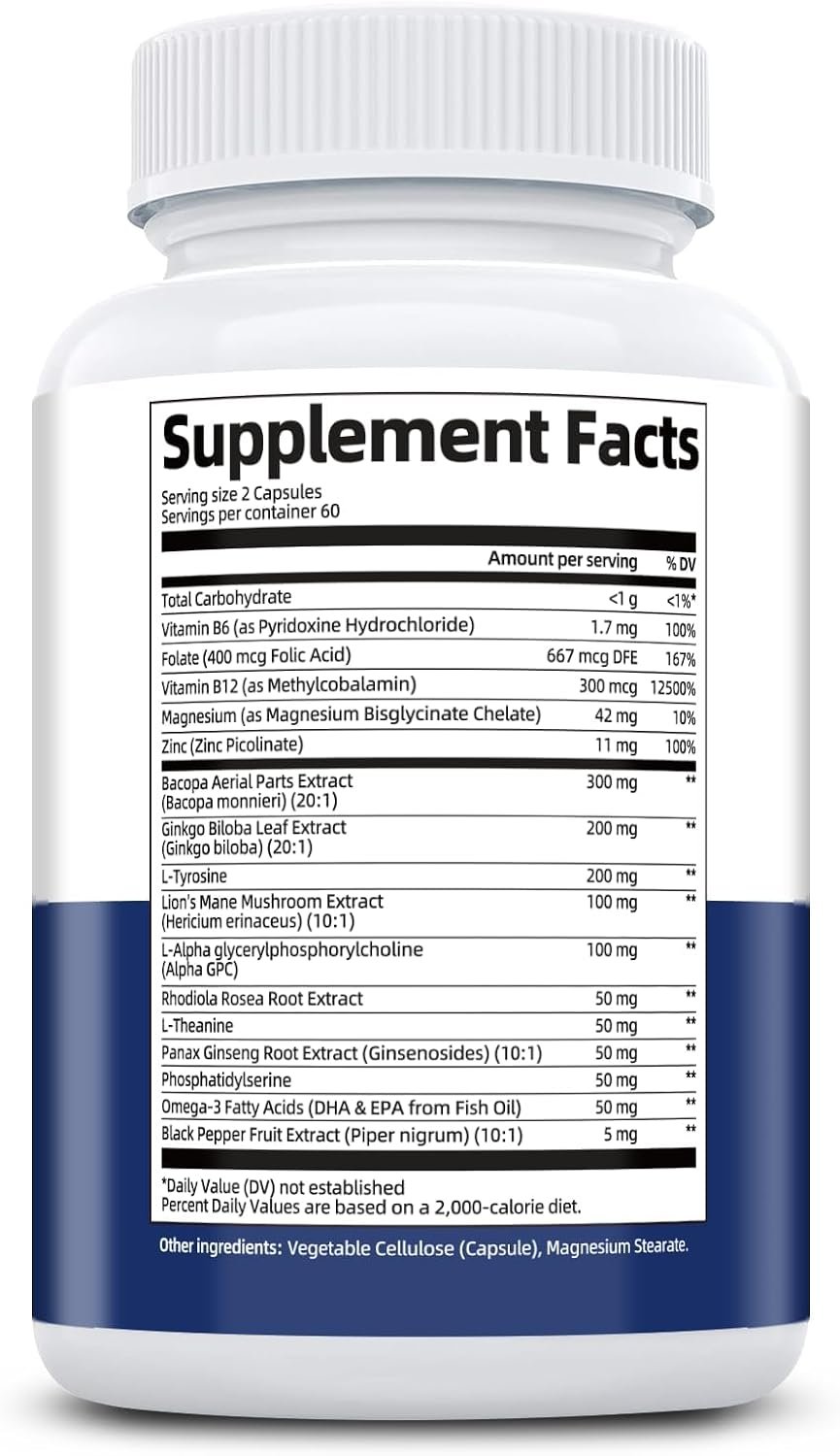
- Listed amounts include mg Bacopa Monnieri, mg Ginkgo Biloba, mg Lion’s Mane, mg Alpha GPC and mg L-Tyrosine.
- Other listed amounts include 1.7 mg vitamin B6, mcg vitamin B12, mg magnesium, mg zinc and mg omega-3s.
- The listing claims support for memory, focus and mental energy, and says it may help with brain fog and fatigue.

What does Migcopat’s Memory and Focus supplement contain, and what does the listing claim?
Migcopat’s Memory and Focus listing specifies capsules and describes a 15-ingredient formula. The disclosed amounts include mg Bacopa Monnieri, mg Ginkgo Biloba, mg Lion’s Mane Mushroom, mg Alpha GPC and mg L-Tyrosine. Other listed amounts are mcg vitamin B12, mcg DFE folate, 1.7 mg vitamin B6, mg magnesium, mg zinc, mg phosphatidylserine, mg L-Theanine and mg omega-3s identified as DHA and EPA.
The manufacturer says Memory and Focus is intended to support memory, focus and mental energy, and claims it may reduce brain fog and fatigue. It also attributes relaxation and balanced-mood support to Rhodiola Rosea and L-Theanine. Those are listing claims, not demonstrated product effects. The page describes the product as gluten-free and non-GMO. Amazon rating, buyer reviews, price, recommended daily serving and independent product testing aren’t available in the supplied information. Memory and Focus should therefore be judged as a listed formula, not a proven outcome.
Which supplements, if any, have clinical evidence for improving memory or focus in healthy adults?
Reliable evidence that supplements improve memory or brain function is lacking, and the research described in one source largely concerns people at risk of decline or already diagnosed with Alzheimer’s disease. That distinction matters: findings in those groups don’t establish benefits for healthy adults or for Migcopat’s Memory and Focus blend.
A meta-analysis reported small improvements in memory, attention time and processing speed with creatine, but not significant improvement in overall cognitive functioning or executive abilities. The cited maintenance dose for creatine monohydrate is 3–5 grams per day; that’s context from the source, not a recommendation for Migcopat, whose listed ingredients do not include creatine. Omega-3 trials have produced mixed results, and the cited source says human evidence for magnesium L-threonate isn’t strong enough to establish reliable memory improvement. The listing’s Memory and Focus language doesn’t demonstrate that its 15-ingredient formula improves cognition. Inclusion of familiar ingredient names is not equivalent to clinical evidence for the finished product.
Do Prevagen or Neuriva improve memory in clinical trials, and how strong is the evidence?
The manufacturer’s study of Prevagen did not show a significant overall benefit on its primary cognitive outcomes. A jury conclusion reported in the supplied source was that the company had not substantiated Prevagen’s memory claims with reliable scientific evidence. These findings caution against treating advertising claims as proof of a memory benefit.
The supplied information doesn’t provide comparable clinical-trial findings for Neuriva, so it doesn’t support a conclusion about whether Neuriva works or a direct evidence-based comparison between Neuriva and Prevagen. Migcopat’s Memory and Focus listing likewise provides ingredients and marketing claims, but no product-specific clinical trial evidence. That absence doesn’t prove the product is ineffective; it means the evidence needed to verify the advertised effects isn’t present here.
For a buyer comparing Memory and Focus products, separate what a label promises from outcomes tested in trials of the actual formula. No supplied source establishes that Migcopat’s specific combination improves memory or focus in healthy adults.
What ingredients and doses are commonly used in brain supplements, and how do they compare?
Migcopat’s Memory and Focus label lists mg Bacopa Monnieri, mg Ginkgo Biloba, mg Lion’s Mane, mg Alpha GPC and mg L-Tyrosine. It also gives mcg vitamin B12, mcg DFE folate, 1.7 mg vitamin B6, mg magnesium, mg zinc, mg phosphatidylserine, mg L-Theanine and mg omega-3s.
The listing calls this a 15-ingredient formula, but the supplied ingredient details don’t give a full dose breakdown for all ingredients. The listed omega-3 amount is mg DHA and EPA; the source advises checking EPA and DHA amounts rather than relying on a general fish-oil figure. For comparison, the cited creatine monohydrate maintenance dose is 3–5 grams per day, while Migcopat’s disclosed ingredient list does not include creatine.
These figures describe the label, not proven effective doses. The evidence supplied doesn’t establish comparative efficacy for most of this Memory and Focus blend’s ingredients.

What evidence supports claims that a vitamin can reduce dementia risk by percent?
The reported percent lower dementia incidence was an association in an observational vitamin D study, not proof that vitamin D caused the difference. The study analyzed roughly 12,400 older adults, whose average age was 71. Observational findings can identify an association, but the supplied information doesn’t show that taking vitamin D would produce that reduction.
That result also sits alongside a review of studies involving more than 83,000 participants that found no quality evidence that vitamin or mineral supplements meaningfully affect cognitive decline or dementia. The source says no vitamin or supplement is currently recommended for preventing Alzheimer’s disease or cognitive decline.
Migcopat lists vitamin B6 and B12, but its product information doesn’t support describing either as dementia prevention. Its Memory and Focus marketing claims should not be read as evidence of reduced dementia risk. A percentage from one observational study isn’t a demonstrated benefit of this product, and the supplied evidence doesn’t establish that the blend prevents cognitive decline.

How can you check a brain supplement’s quality, testing, and ingredient label before buying it?
Dietary supplements don’t have to pass the same rigorous FDA process described in the source for ensuring safety and effectiveness. Before choosing a Memory and Focus supplement, check that the label provides a clear ingredient list and amounts, useful dosage information, accurate labeling and independent testing or certification.
USP, NSF or another reputable independent organization may offer some reassurance that a supplement’s contents match its label, but certification doesn’t prove that it works. Migcopat’s listing describes the product as gluten-free and non-GMO; those listing statements aren’t evidence of independent testing. The information available here doesn’t establish whether the complete label, manufacturing quality or testing has been independently verified.
For Memory and Focus, pay particular attention to whether amounts are disclosed for every ingredient and whether the directions make serving size clear. The supplied details give several ingredient amounts but don’t provide a recommended daily serving, and no testing certification is supplied. Without those details, you can’t use the listing alone to confirm independent verification or evaluate the complete formula.
What side effects and medication interactions can brain supplements cause?
Vitamin E, ginkgo and fish oil may slightly inhibit blood clotting, and combining them with warfarin could increase bleeding or bruising. The cited source also warns that high-dose omega-3 treatment can modestly increase atrial fibrillation and bleeding risk in some patients. Fish-oil supplements may cause gastrointestinal discomfort and interact with medicines that affect clotting.
Long-term use of high doses of vitamin B6 can cause nerve damage; magnesium supplements may cause diarrhea, nausea or abdominal cramping and can interfere with absorption of certain medicines. Huperzine A has a separate list of reported adverse effects, and the source recommends discussing it with a physician when prescription acetylcholinesterase inhibitors are used. The supplied Migcopat ingredient details don’t identify huperzine A, and these general risks don’t show that they occur at this product’s listed doses.
Ask a healthcare provider about medication interactions and underlying health concerns before starting Memory and Focus or another supplement. Migcopat’s general safety language isn’t evidence that this specific blend is safe for every adult.
How much do common memory and focus supplements cost, and how long are they typically taken?
No price for Migcopat or prices for comparable supplements are available in the supplied information, so a cost comparison or cost per serving can’t be calculated. The listing specifies capsules, but the available details don’t state a recommended daily serving. That means the bottle’s duration can’t be worked out from the capsule count alone.
A source says some improvements may appear within a few weeks and stronger benefits may take several months. That is a general source claim, not a tested or established timeline for Migcopat’s Memory and Focus formula. It doesn’t show how long you would need to take this product, whether it would produce a benefit, or how many capsules make up a daily serving.
Before comparing the value of Memory and Focus products, you’d need their prices and serving directions. Neither a typical course length nor a product-specific time to benefit is established in the information provided, so estimating either would be guesswork.
Which lifestyle changes have stronger evidence than supplements for supporting memory and focus?
A Mediterranean-style diet and regular physical exercise are recommended by one source for supporting healthy brain aging. Other interventions described as having strong support for long-term brain health include regular activity, adequate sleep, and managing high blood pressure and diabetes.
The supplied sources also identify hearing, social interaction, nutrition, metabolic health and treatment of underlying conditions as factors that may matter more than adding a supplement. Another source names a balanced diet, regular physical activity, and social and intellectual stimulation as the current best bets for preventing or delaying dementia. These are general recommendations, not a promise that any one person can avoid cognitive decline.
That context can help you weigh a Memory and Focus purchase against routines and health issues that the sources highlight. A supplement’s listing claims don’t replace sleep, activity, dietary choices or appropriate care for underlying conditions. The evidence here supports considering those broader habits, while not guaranteeing an individual outcome.
Pros and Cons

Pros
- The listing specifies a 120-capsule bottle.
- The listing discloses amounts for several named ingredients and nutrients.
- The listing describes the product as gluten-free and non-GMO.
Cons
- The supplied information doesn’t provide product-specific clinical trial evidence for the advertised cognitive benefits.
- The listing details don’t provide a recommended daily serving or full dose breakdown for all ingredients.
- Price, buyer reviews and independent testing certification aren’t available in the supplied information.
Final Verdict
| Supplement | Reported safety concern |
|---|---|
| Vitamin E | Vitamin E doses higher than IU per day are described as risky for people… |
| Omega-3s / fish oil | The source warns that high-dose omega-3 treatment can modestly increase atrial… |
| Huperzine A | The source says huperzine A may cause nausea, diarrhea, sweating, slowed heart… |
| Vitamin B6 | Long-term use of high doses of vitamin B6 can cause nerve damage. |
| Magnesium | Magnesium supplements can cause diarrhea, nausea, or abdominal cramping and… |
| Supplement or supplement category | Reported cognitive finding |
|---|---|
| Creatine | A meta-analysis found small improvements in memory, attention time, and… |
| Prevagen | The manufacturer’s study of Prevagen did not show a significant overall benefit… |
| Vitamin or mineral supplements | A review of studies with more than 83,000 participants found no quality… |
Key Takeaways
- Treat Migcopat’s cognitive and mood benefits as listing claims, not established product effects.
- Check serving directions and full ingredient amounts; the supplied details don’t give a complete 15-ingredient dose breakdown.
- Price, buyer reviews, recommended daily serving and independent testing aren’t available in the supplied product information.
- Consult a healthcare provider about medication interactions or underlying health concerns before starting a supplement.
Frequently Asked Questions
Do brain function supplements really work?
Reliable evidence that supplements improve memory or brain function is lacking. Some research reports limited or mixed findings for particular supplements, but that doesn’t establish that Migcopat’s blend works.
What does Joe Rogan take for memory?
The supplied information doesn’t say what Joe Rogan takes for memory, so that’s unknown here. It also doesn’t provide evidence that any specific regimen he may use improves memory.
What vitamin cuts dementia by percent?
An observational study associated increased vitamin D exposure with percent lower dementia incidence among regularly exposed participants, but it doesn’t prove vitamin D caused the difference. The study involved roughly 12,400 older adults with an average age of 71.
Does Prevagen or Neuriva actually work?
The manufacturer’s Prevagen study didn’t show a significant overall benefit on its primary cognitive outcomes. The supplied information doesn’t provide comparable clinical-trial findings for Neuriva, so it doesn’t support a conclusion about its effectiveness.