The Hard Protective Travel Case may suit you if you want a compact organizer for glucose-testing supplies, but its listed $12.95 price and temporarily out-of-stock status are worth weighing before purchase. The inDomit listing gives interior dimensions of 5.51 x 3.54 x 1.97 inches and describes four compartments, but it doesn’t verify that every meter or supply kit will fit.
- The listed interior size is 5.51 x 3.54 x 1.97 inches (140 x x mm).
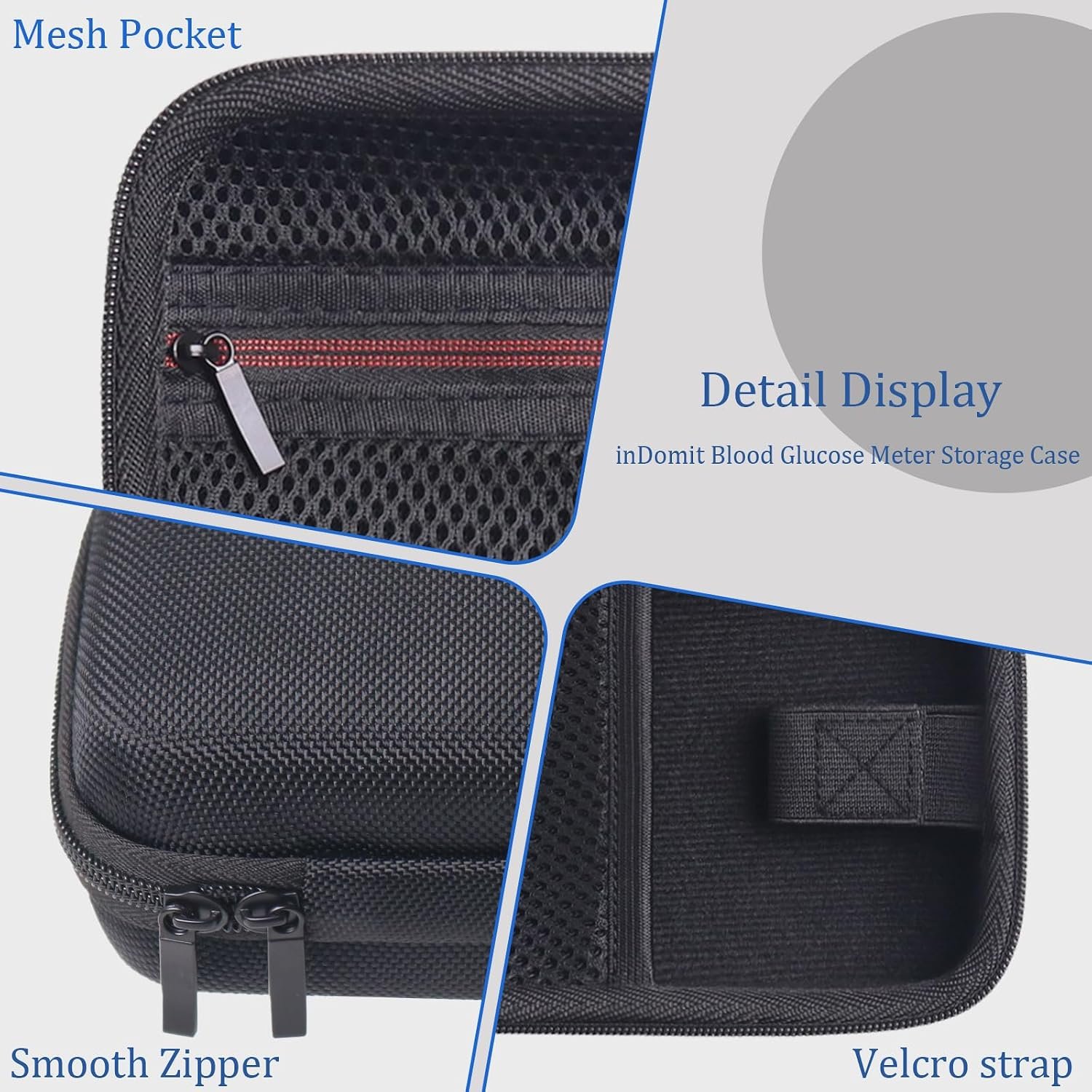
- The case has four listed compartments and comes with two needle storage boxes.
- The listing describes a zipper closure and a hand strap.
- The listed price is $12.95, and the item is temporarily out of stock.

What is the Hard Protective Travel Case, and which blood glucose testing items can it hold?
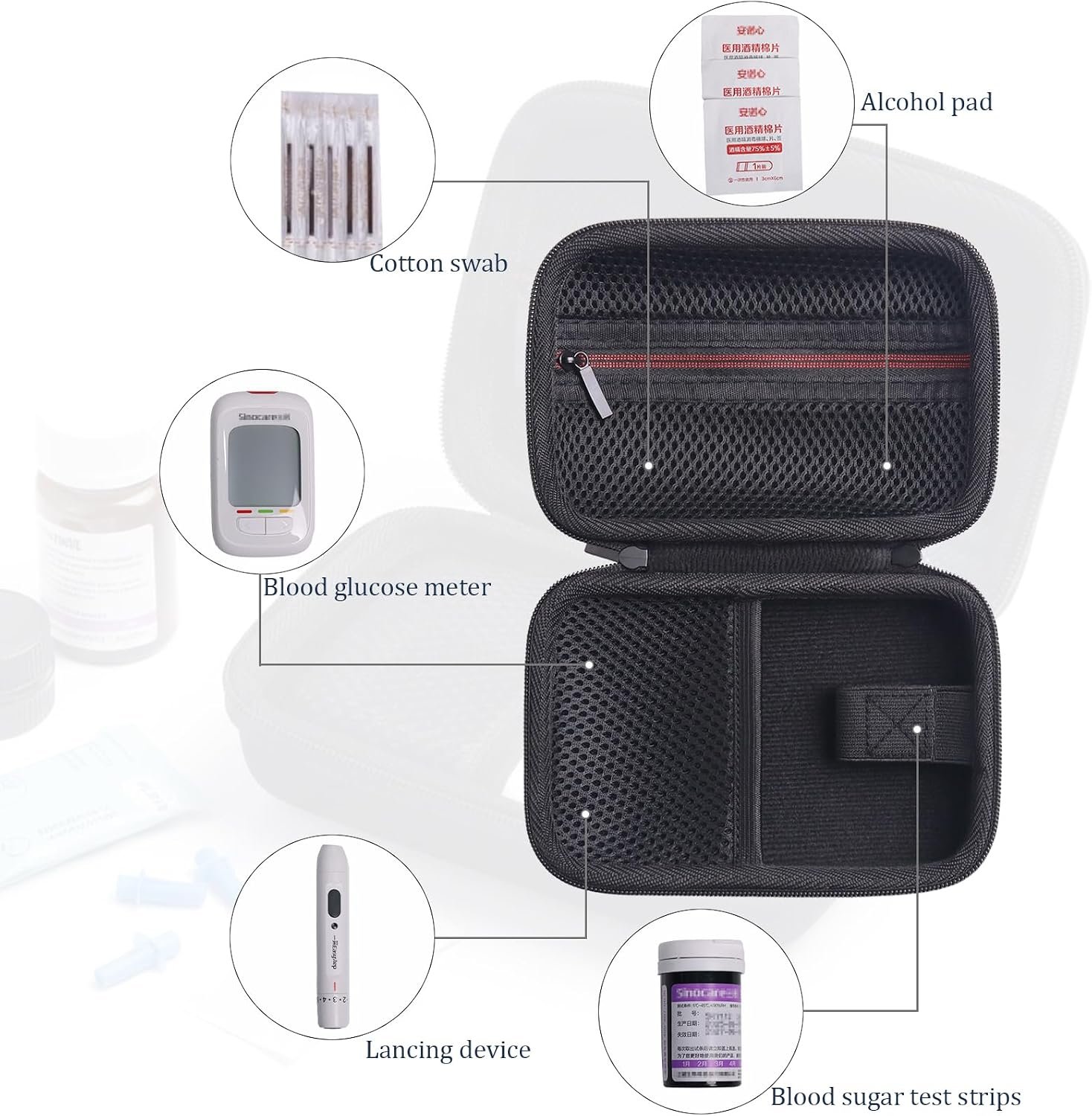
The inDomit Hard Protective Travel Case is listed as an EVA hard-shell storage case with a soft interior lining for blood glucose supplies. The listing names a meter, test strips, lancets and a lancing device as compatible items, but that wording doesn’t establish that every model or complete kit will fit.
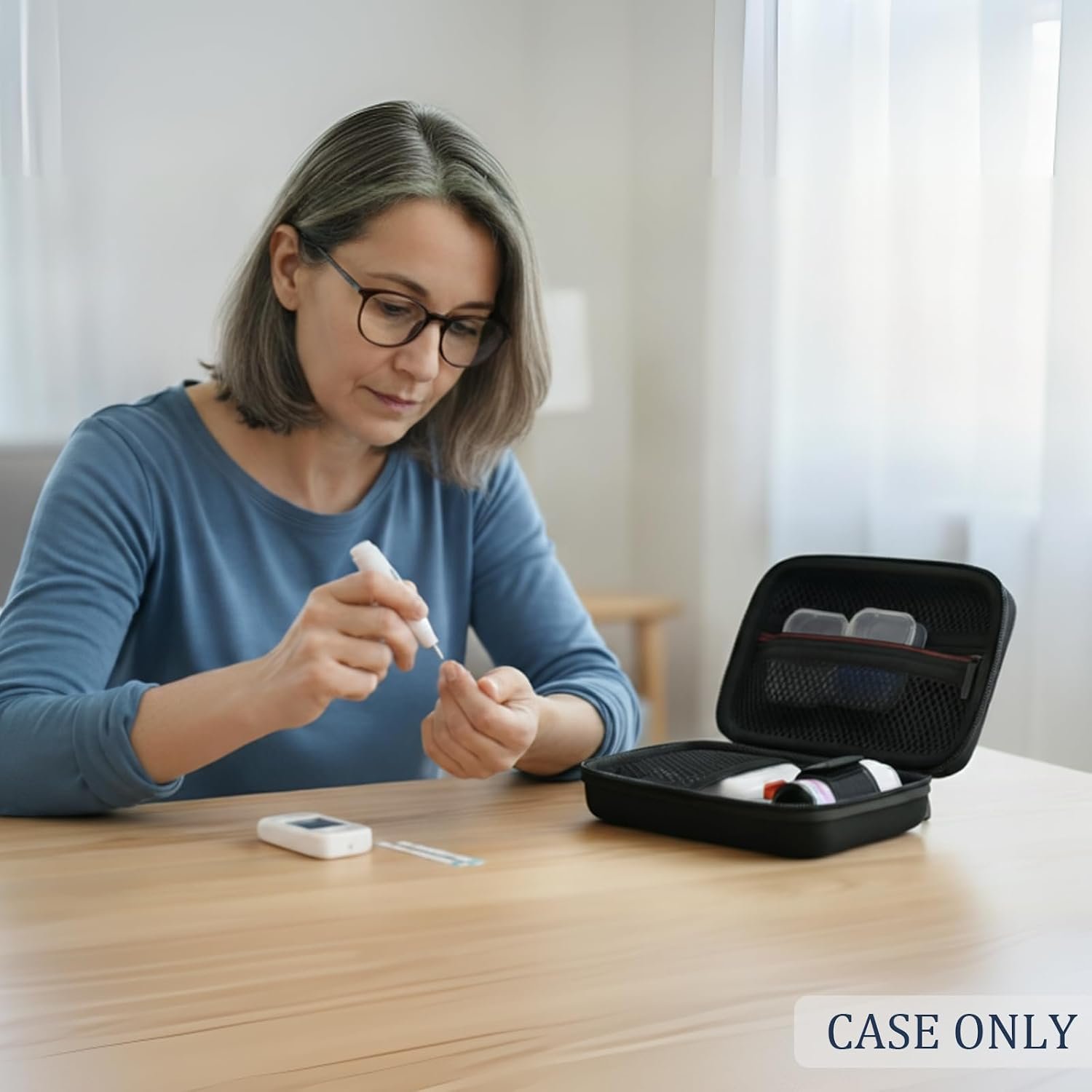
The listing specifies four compartments and two needle storage boxes. It also says the case is sold by itself: items shown in product photos are illustrative and aren’t included. Plan to supply your own meter and testing items.
Before choosing the Hard Protective Travel Case, compare your equipment with the listed interior dimensions; the listing supplies no item-by-item fit measurements. Capacity depends on the case and the equipment you carry. The Hard Protective Travel Case is therefore best assessed against your actual kit, rather than the compatibility wording alone.
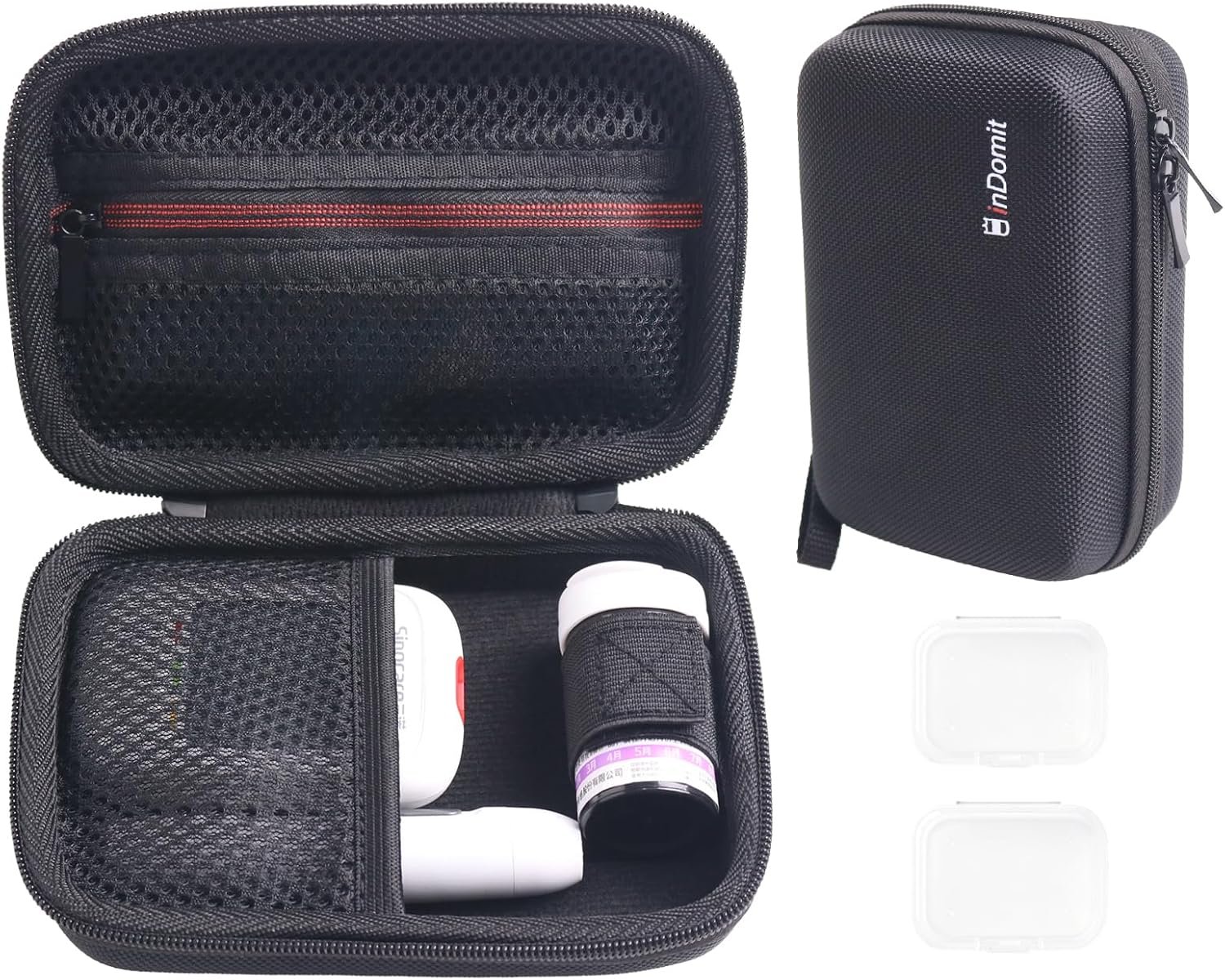
What case dimensions and compartments are needed to fit a glucose meter, test strips, lancets, and insulin supplies?
The inDomit case’s listed interior measures 5.51 x 3.54 x 1.97 inches (140 x x mm). Its specification lists four compartments, a zipper closure and a hand strap. Those details describe the case, not the dimensions of any particular meter, insulin supply or other item.
For the Hard Protective Travel Case, compare those interior measurements and the compartment arrangement with the supplies you intend to carry. The available listing gives no item-by-item fit measurements, so it can’t confirm a specific device will fit. Capacity depends on both the case and your equipment.
Glucology’s comparison offers context, not a direct size match: its Classic case is designed for daily carry, while its Plus case is designed for longer trips; dimensions for those cases aren’t provided in the available information. The Hard Protective Travel Case may suit a kit that fits its stated interior, but a fit for your own supplies remains unverified until you compare them.
How can you tell whether a travel case will keep temperature-sensitive insulin within its required storage range?
The inDomit listing describes a storage case; it does not claim that the Hard Protective Travel Case cools insulin or controls its temperature. The available product information also gives no temperature-control performance or storage-range figure, so it can’t establish that insulin will remain within its required range.
Glucology advises against assuming an organizer cools insulin and recommends a separate insulin cooling bag when cooling is needed. Follow the medication manufacturer’s storage instructions for temperature-sensitive medicine. Those are the available sources’ practical limits: the organizer’s listing does not replace medication-specific guidance.
For the Hard Protective Travel Case, treat its listed function as storage rather than refrigeration. If your medication needs cooling, consider the separate cooling approach described by Glucology and check the manufacturer’s instructions. The Hard Protective Travel Case has no listed temperature-control claim, and no temperature range is provided in the available information.
What is the typical price difference between hard-shell and soft travel cases for diabetes supplies?
The inDomit listing shows a price of $12.95 and says the item is temporarily out of stock. That is the listed price for this case, not evidence of a typical price for hard-shell organizers or a comparison with soft travel cases.
The available information provides no soft-case prices and no broader comparison of hard-shell and soft-case prices. A typical price difference therefore can’t be established from these sources. Price alone also doesn’t demonstrate fit, cooling performance or protection.
If you’re considering the Hard Protective Travel Case, use the listed $12.95 as the product’s stated price, while noting its listed availability. The Hard Protective Travel Case’s price does not show whether it offers better value than another style. No comparative prices are available here, so a claim that hard cases typically cost more or less would go beyond the evidence.

How should you pack and carry diabetes supplies in a hard case when flying, including through airport security?
The inDomit listing describes a travel-oriented case with a hand strap, which is a stated carry feature. It lists four compartments, but says the case is sold without the supplies shown in photos. You’ll need to pack your own equipment.
Before packing the Hard Protective Travel Case, compare your kit with its listed interior dimensions of 5.51 x 3.54 x 1.97 inches (140 x x mm). The listing does not provide item-by-item fit measurements, so checking your actual supplies against the case is important.
The product information and other available sources provide no airport-security or flying procedures for this case. That means this review can’t give case-specific instructions for screening or carrying medication through security. The Hard Protective Travel Case is described as portable and travel-suitable, but those claims don’t establish airport requirements. Treat the Hard Protective Travel Case’s listed strap and compartments as carry and storage details, not guidance on security rules.
What risks can a hard case pose to insulin or glucose-monitoring supplies, such as heat buildup, moisture, or pressure?
The listing describes the inDomit case as having a hard EVA exterior and soft lining, and identifies its water-resistance level as water resistant. These are listing claims, not independently verified test outcomes. The available information includes no test results for heat buildup, moisture protection or pressure protection.
The listing also describes protection against drops, spills and scratches, but the available sources don’t verify that those hazards are prevented. Don’t treat the Hard Protective Travel Case as a guarantee against damage, or as a temperature-control product: the listing identifies it as a storage case, not a cooler.
Glucology advises not assuming an organizer cools insulin and recommends a separate cooling bag when cooling is needed. Follow the medication manufacturer’s storage instructions. For the Hard Protective Travel Case, the Hard Protective Travel Case’s material and water-resistance descriptions don’t answer whether your medication will stay within its required storage conditions.
How should you clean a diabetes travel case and check that its supplies are ready for a trip?
The available product information gives no cleaning method or care instructions for the inDomit case. There’s no manufacturer-approved cleaning process in the supplied information, so this review can’t recommend a particular cleaner or method.
Before a trip, check the case and its contents, then compare the supplies you plan to carry with the listed interior size of 5.51 x 3.54 x 1.97 inches (140 x x mm). The specification lists four compartments, which you can consider when checking whether your own kit fits. The listing does not give item-by-item fit measurements.
For the Hard Protective Travel Case, confirm that your intended supplies fit the compartments and interior dimensions before relying on it for your kit. If you’re carrying temperature-sensitive medication, follow the medication manufacturer’s storage instructions. The Hard Protective Travel Case’s available information doesn’t establish a cleaning routine or verify a particular fit, so those details remain unresolved.
Pros and Cons

Pros
- The listing specifies four compartments and two needle storage boxes.
- The listing gives interior dimensions of 5.51 x 3.54 x 1.97 inches (140 x x mm).
- A zipper closure and hand strap are listed.
Cons
- The listing provides no item-by-item measurements to confirm that a particular meter or kit will fit.
- The case is sold without the supplies shown in the photos.
- The listing makes no cooling or temperature-control claim for insulin.
- The item is listed as temporarily out of stock.
Final Verdict
Key Takeaways
- Compare your own equipment with the stated interior dimensions before relying on the case for a complete kit.
- The listing specifies four compartments and two needle storage boxes, but the pictured supplies aren’t included.
- Don’t assume the case cools insulin; follow the medication manufacturer’s storage instructions.
- The listed price is $12.95, and the item is temporarily out of stock.
Frequently Asked Questions
How to travel with diabetic meds?
The available sources advise following the medication manufacturer’s storage instructions and not assuming an organizer cools insulin. They don’t provide general travel procedures or airport-security guidance.
What is the first thing a diabetic should drink in the morning?
The available information doesn’t say what a person with diabetes should drink first thing in the morning.
What is the 3-hour rule for diabetics?
The available information doesn’t define a “3-hour rule” for diabetes.
Is there a way to get free diabetic supplies?
The available information doesn’t describe programs or eligibility for free diabetes supplies.