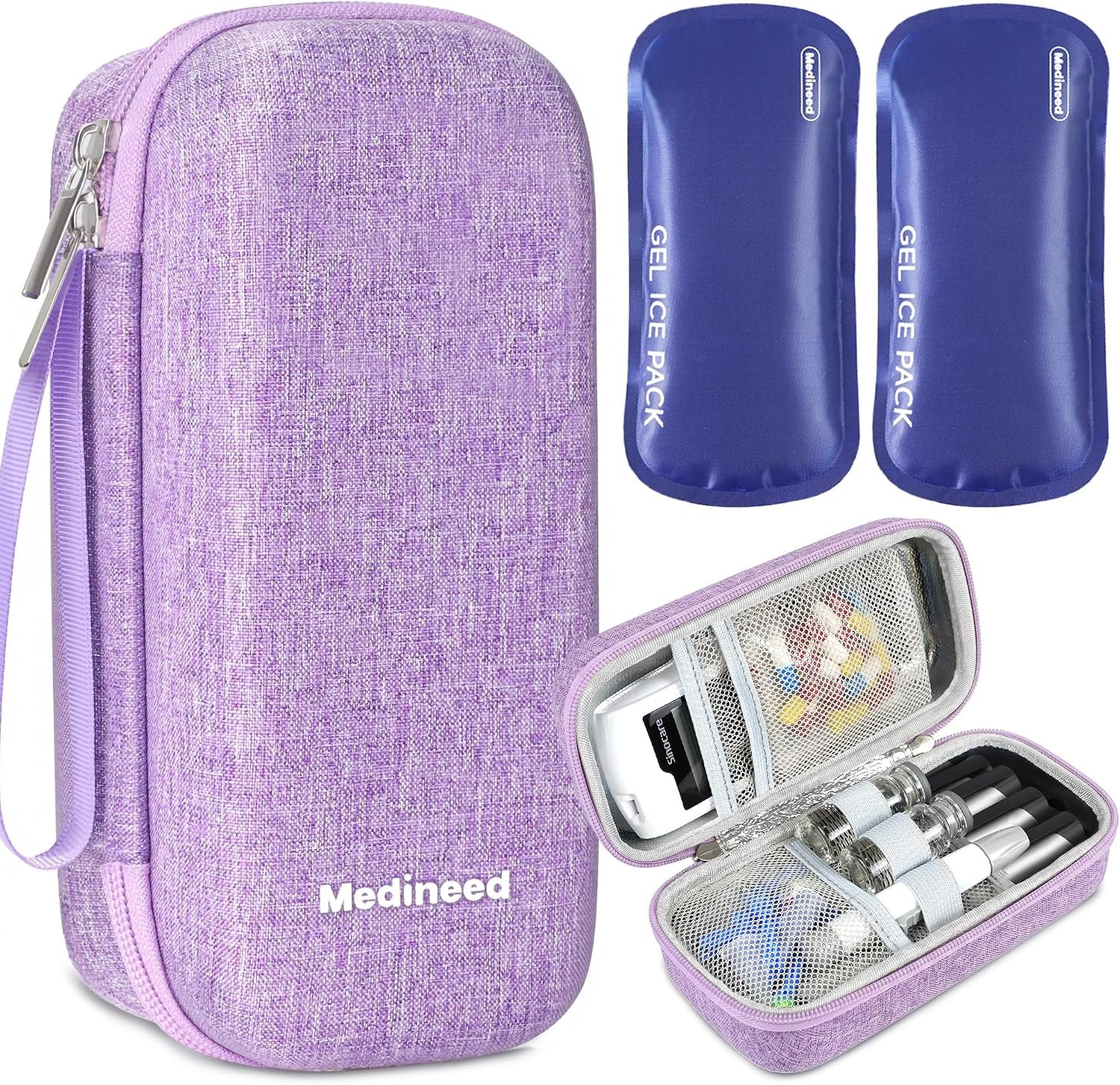
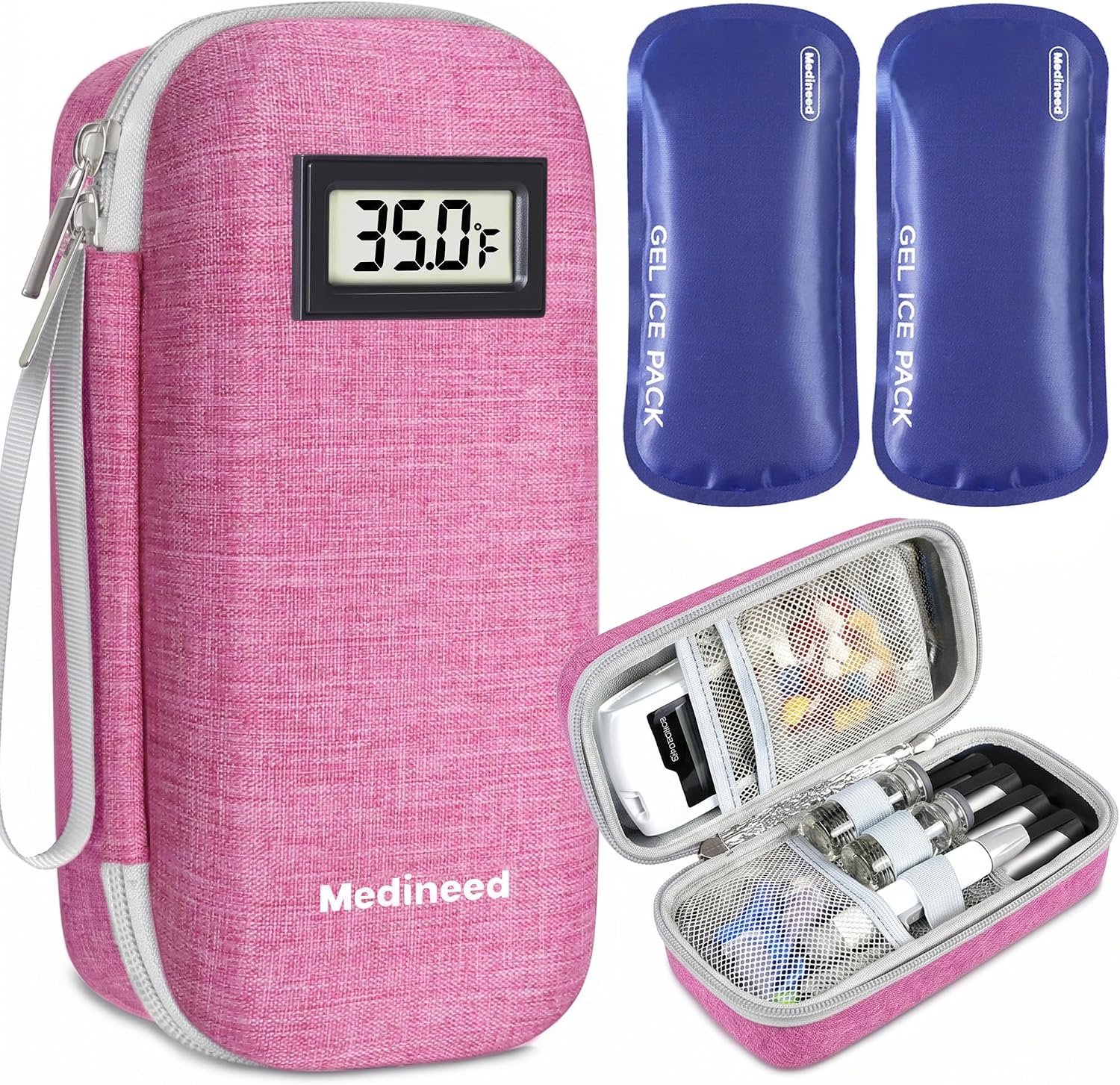
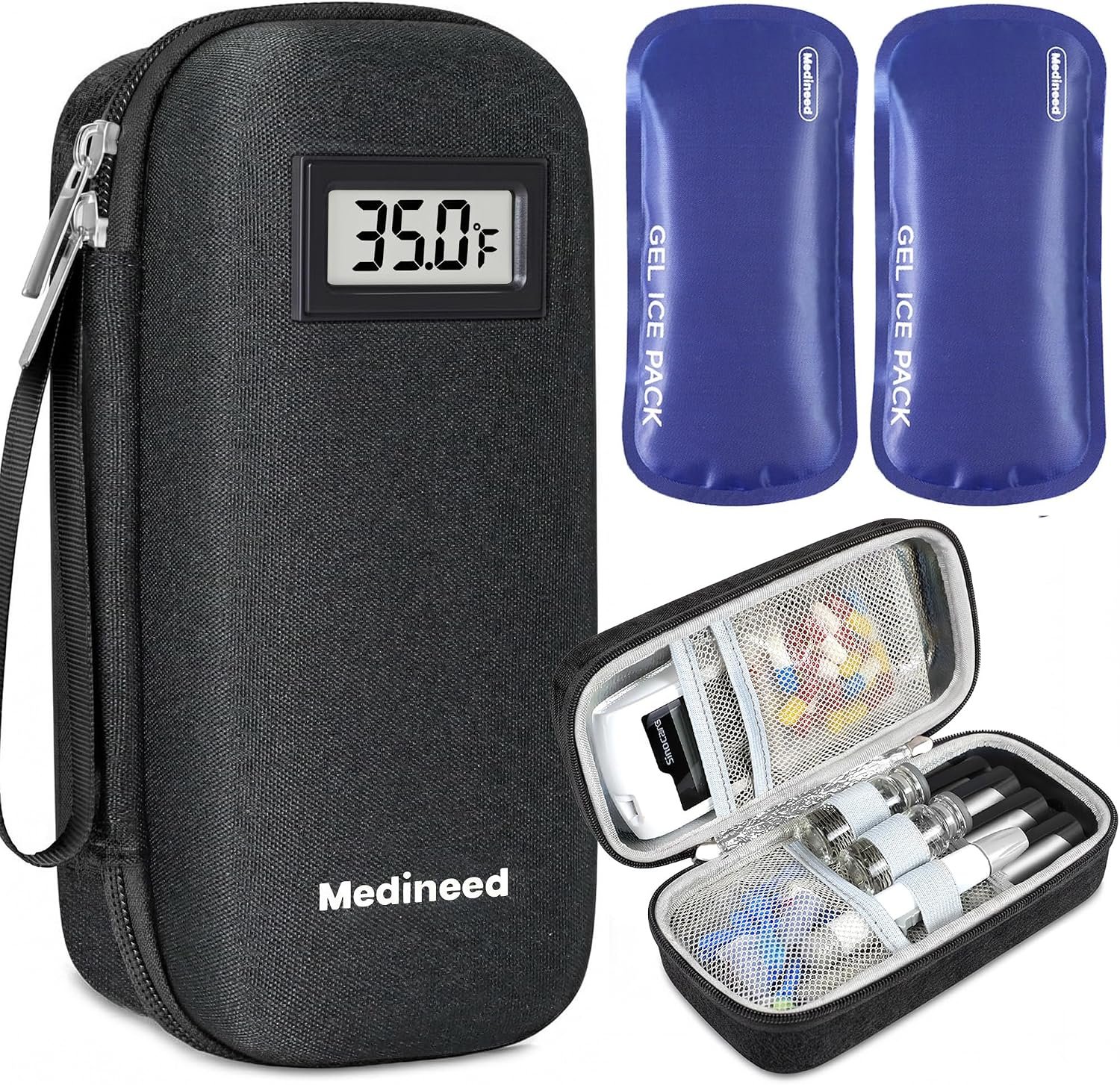
The Temperature Display Insulin Travel Case TSA Approved,Black may suit you if you want a listed $13.99 case with a temperature display and cooling packs; the Insulin Travel Case is claimed to hold to insulin pens and cool them for 8–10 hours. Those figures are listing claims, not independently verified results, and the available facts give no temperature range or display-accuracy specification.
- The listing claims capacity for to insulin pens and includes elastic mesh pockets.
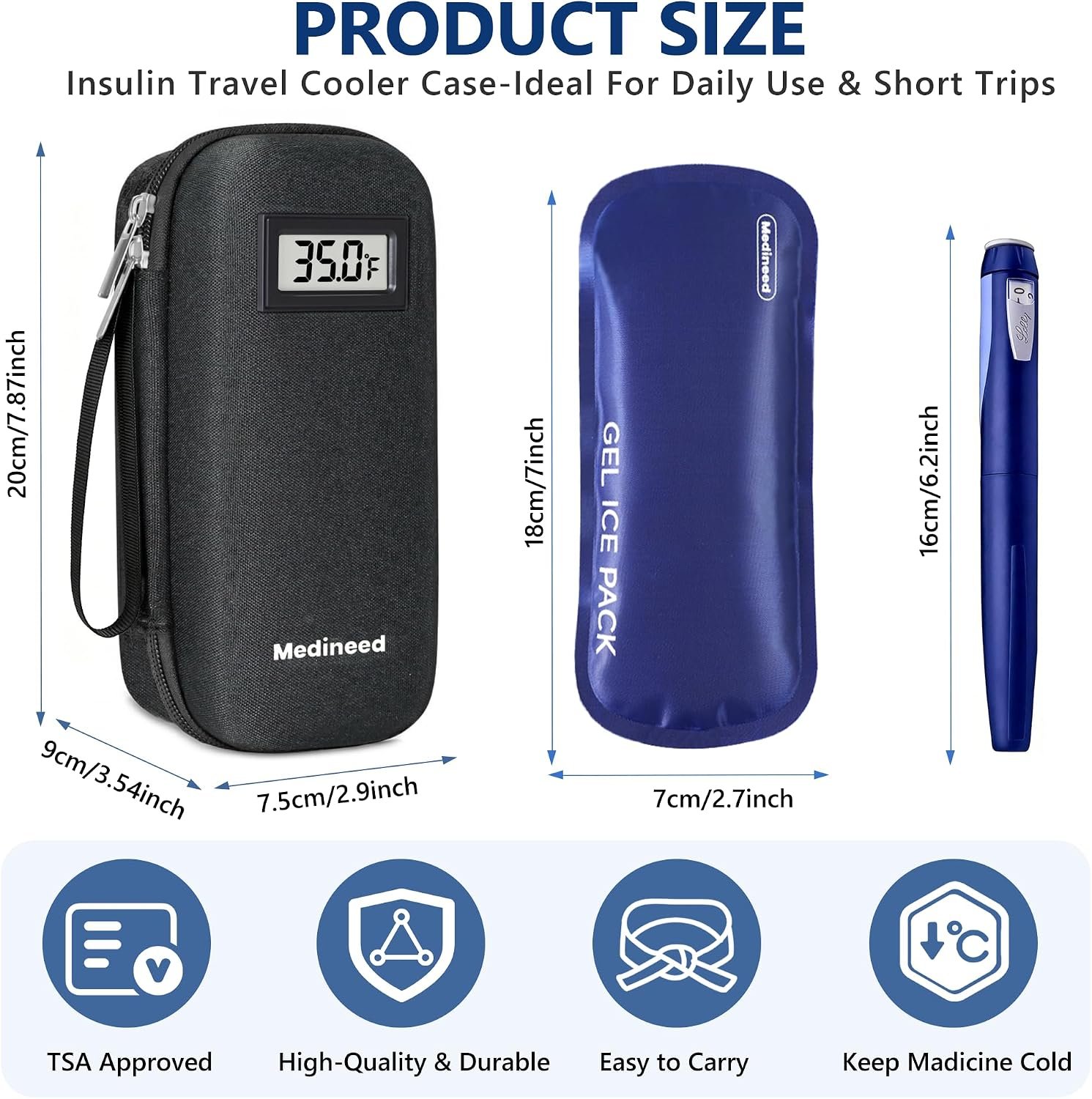
- The listing says two 125g ice packs provide cooling for 8–10 hours, including in hot weather.
- A built-in sensor is described as letting you check the medicine temperature without opening the case.
- The Amazon listing shows a price of $13.99 and In Stock availability.

What is the Temperature Display Insulin Travel Case, and how does its cooling system work?
The Temperature Display Insulin Travel Case is listed as a soft-sided medicine organizer with a built-in sensor and two ice packs. The listing says you can check the medicine temperature without opening the case, but it doesn’t publish a sensor-accuracy figure. The Insulin Travel Case uses two 125g ice packs for cooling, according to the product description; no powered cooling method is specified for this product. That distinction matters if you expect an electronic system to actively cool the contents.
Travel insulin coolers are designed to regulate medication temperature within recommended ranges, but that general purpose doesn’t establish how well a particular model performs. The Insulin Travel Case’s cooling performance should therefore be understood as a listing claim about ice packs, not a tested temperature-control result. The product page doesn’t state a target temperature range, and its description doesn’t explain whether the sensor records temperatures over time.
What temperature range can the Insulin Travel Case maintain, and how accurate is its display?
The Insulin Travel Case listing claims real-time temperature monitoring, but it doesn’t state a temperature range or an accuracy figure for the display. That leaves two practical questions unanswered: what temperatures the case can maintain, and how closely the display reflects the medicine’s temperature.
The Explorer USB lid provides a comparison point, not a specification for this case: its stated range when plugged in is 46°F / 8°C to 79°F / 26°C. Buyer reports on the product page include experiences in which the display was one degree off, but those comments aren’t a verified accuracy test. The Insulin Travel Case therefore shouldn’t be treated as having demonstrated precision or a particular safe operating range on the basis of the listing alone. No independent measurement or sensor-calibration method is provided in the available facts.
How long can the case keep insulin cool on battery power, USB power, or cooling packs?
The Insulin Travel Case listing claims that its ice packs keep temperature-sensitive medicine cool for 8–10 hours, including in hot weather. The product information doesn’t specify battery operation or USB power for this case, so there’s no supported battery-life or powered-cooling figure to compare.
Other products make different claims under different setups: the Explorer is described as providing up to hours with its included frozen gel pack, without power during use. With a Biogel Freeze Pack and USB Lid used together, the Explorer is claimed to keep medicines cold for up to days. These figures aren’t directly interchangeable because the products and cooling arrangements differ. The Insulin Travel Case has also received buyer reports that it didn’t stay cold as long as advertised; those are customer experiences, not measured tests. If duration is critical, the listing alone doesn’t establish how long this case will maintain a particular temperature in your travel conditions.
What features should you compare when choosing an insulin travel case?
The Insulin Travel Case listing says it holds to insulin pens and has elastic mesh pockets for other medicines. It lists a $13.99 price and In Stock availability. No dimensions are provided in the available facts for this product, so its size can’t be checked against a bag or compared numerically here.
When comparing coolers, consider whether they maintain a steady temperature, are compact enough to carry, use protective water-resistant materials, and offer power options that fit your trip. The Explorer is listed for up to five insulin pens, a higher stated capacity than this case’s 1-to-4-pen claim, but its cooling system differs. The Explorer’s listed dimensions must not be mistaken for this product’s size; they don’t establish the Insulin Travel Case’s measurements. Before choosing, weigh the stated capacity and cooling approach against the missing size and temperature specifications.
Can you take the Insulin Travel Case and its cooling packs through TSA?
The Insulin Travel Case listing says its two 125g ice packs meet TSA security standards and can be carried on board. It also instructs you to keep the ice packs frozen for airline travel. These are product-page claims, not independent confirmation of screening requirements; the available sources don’t provide detailed screening rules.
The listing suggests keeping the case accessible to speed up the security check, but that wording doesn’t guarantee how a screening will proceed. General travel guidance in the available sources advises checking whether a cooler meets airline standards before departure. For the Insulin Travel Case, confirm current requirements with the relevant airline and screening authority rather than relying only on the product’s “TSA Approved” wording. The available facts don’t specify separate rules for batteries, and they don’t establish that any screening decision is assured.

How should you pack and use an insulin travel case to prevent freezing or overheating?
The Insulin Travel Case instructions say to freeze its included gel ice pack for 10–12 hours before use. The available facts don’t establish additional preparation steps for this product, so don’t assume another cooler’s directions apply to it.
The Explorer’s Biogel pack has separate instructions: freeze it for 6–8 hours, then remove surface frost by briefly using lukewarm water or leaving the pack out before placing it in that cooler. The source says this step removes surface frost to reduce the risk of freezing medicine in direct contact with the cooling component. Those are Explorer instructions, not established directions for the Insulin Travel Case. Insulin can lose effectiveness after exposure to extreme heat or cold. The general guidance also recommends regularly wiping a cooler inside and out to help prevent mold, odors, or potential contamination. Follow the directions provided with your specific product.
What are the risks of relying on the temperature display, and how can you verify storage conditions?
The Insulin Travel Case listing describes a built-in sensor that lets you view the medicine temperature without opening the case, but it gives no accuracy specification. Buyer comments include reports of a display being one degree off; those reports are mixed customer experiences, not a measured finding.
General guidance recommends monitoring the cooler temperature with a thermometer or using a model with a built-in display. A display reading can offer a point-in-time check, but the available facts don’t say that this product records the medicine’s full temperature history. Nor do they specify a way to independently verify the Insulin Travel Case sensor’s accuracy. A displayed value should not be presented as proof of every condition the medicine experienced during travel. The listing’s real-time viewing claim is useful to know, but the missing accuracy and history details limit what you can conclude from it.
What should you do if the case’s temperature goes outside the recommended range?
The Insulin Travel Case information doesn’t provide product-specific steps for assessing or using medicine after a temperature excursion. The available source information identifies extreme heat or cold as a risk because insulin can lose effectiveness after exposure.
The listing also doesn’t state a temperature range for this case, so the available facts don’t establish a product-specific threshold at which you should take action. No medication-recovery procedure is supplied, either. Don’t infer a safe temperature limit or assume that cooling the case again resolves the question; neither conclusion is supported by the available product information. If the displayed temperature appears outside the range recommended for your medicine, the evidence here is insufficient to determine whether that medicine remains suitable for use. The Insulin Travel Case listing doesn’t answer that situation, and this review can’t supply a product-specific procedure that the sources don’t provide.
What do buyers say about the temperature display and cooling performance?
Buyer experiences with the Insulin Travel Case display are mixed, with some reports saying it was one degree off. That comment is a customer report, not a verified test of the sensor’s accuracy, and the available facts don’t say how the reported difference was measured.
Customer feedback also includes reports that the case didn’t stay cold as long as advertised. Those reports sit alongside the listing’s claim that the ice packs provide 8–10 hours of cooling, including in hot weather; neither the buyer comments nor the product-page claim establish a measured result for every use. The Insulin Travel Case therefore has a stated cooling duration, but the available evidence includes buyer concerns about temperature retention and doesn’t provide independent performance testing. Treat the feedback as useful caution, not a definitive finding about what every unit will do.
Pros and Cons

Pros
- The listing claims a built-in sensor lets you check the medicine temperature without opening the case.
- The case is listed as holding to insulin pens and includes elastic mesh pockets.
- The listing claims its two 125g ice packs provide 8–10 hours of cooling, including in hot weather.
Cons
- The listing provides no temperature range or display-accuracy figure.
- Battery or USB operation isn’t specified for this case.
- Buyer reports include concerns that the display was one degree off and that cooling didn’t last as long as advertised.
- No dimensions are provided for this product in the available listing facts.
Final Verdict
Key Takeaways
- Treat the 8–10-hour cooling duration as a listing claim, not a verified test result.
- Check the airline’s requirements before travelling; the product’s TSA statement isn’t independently verified in the available sources.
- The listing doesn’t give a temperature range or display-accuracy figure.
- Compare the stated 1-to-4-pen capacity with your needs; product dimensions aren’t available in the listing facts provided here.
Frequently Asked Questions
Does the case have a battery or USB cooling option?
The available listing facts specify two ice packs but don’t specify battery or USB operation for this case.
What temperature range does the display show?
The listing claims real-time monitoring but gives no stated temperature range or display-accuracy figure.
How many insulin pens does it hold?
The listing says the case holds to insulin pens and includes elastic mesh pockets.
How long do the cooling packs last?
The listing claims 8–10 hours of cooling, including in hot weather; buyer reports include concerns that the case didn’t stay cold as long as advertised.
Are the ice packs allowed on a flight?
The listing says its two 125g ice packs meet TSA security standards and can be carried on board, and says they must remain frozen for airline travel. These claims aren’t independently verified here.