The Ketone Testing Meter may suit you if you want a portable breath-testing device without listed strip or lancet costs, but its accuracy and the meaning of its mmol/L breath reading aren’t established in the available product information; the listed price is £34.11. The listing identifies it as Health Monitor Systems model CKUET-90B and says it is in stock.
- Listed price: £34.11
- The listing describes a breath test and an mmol/L display
- Model CKUET-90B; manufacturer: Health Monitor Systems
- Package dimensions are 6.18 x 3.9 x 1.73 inches; listed package weight is 3.53 ounces

What does the Ketone Testing Meter measure, and how do blood and breath readings differ?
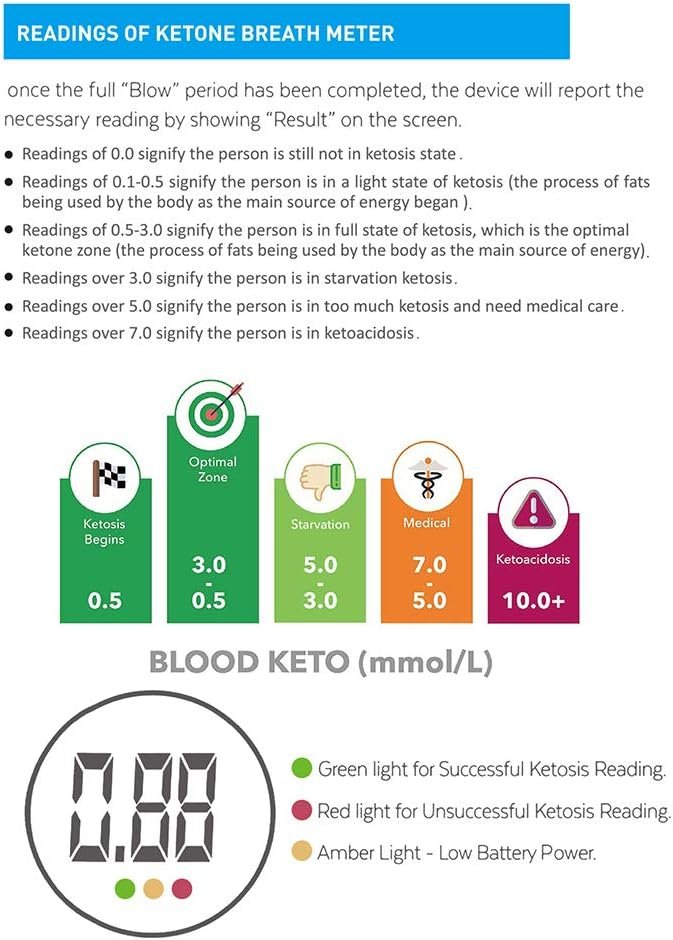
The Ketone Testing Meter is listed as Health Monitor Systems model CKUET-90B. Its listing describes a breath test that displays a ketone reading in mmol/L. That unit alone doesn’t establish what the device measures: breath tests measure exhaled acetone, generally expressed in parts per million, while blood tests measure BHB in blood and report its concentration in mmol/L.
The listing’s combination of a breath test and an mmol/L display leaves an important question unanswered. The available information doesn’t explain how the Ketone Testing Meter converts or relates a breath-sensor result to blood BHB. So you shouldn’t assume its displayed value is directly comparable with a blood ketone result just because both are shown using mmol/L. The product name refers to blood and breath analysis, but the supplied specification describes blowing into the device and doesn’t explain a separate blood-testing procedure. Before using the reading to make health decisions, establish what the displayed number represents with reliable product documentation or a healthcare professional.
How accurate are breath ketone testers compared with blood ketone meters?
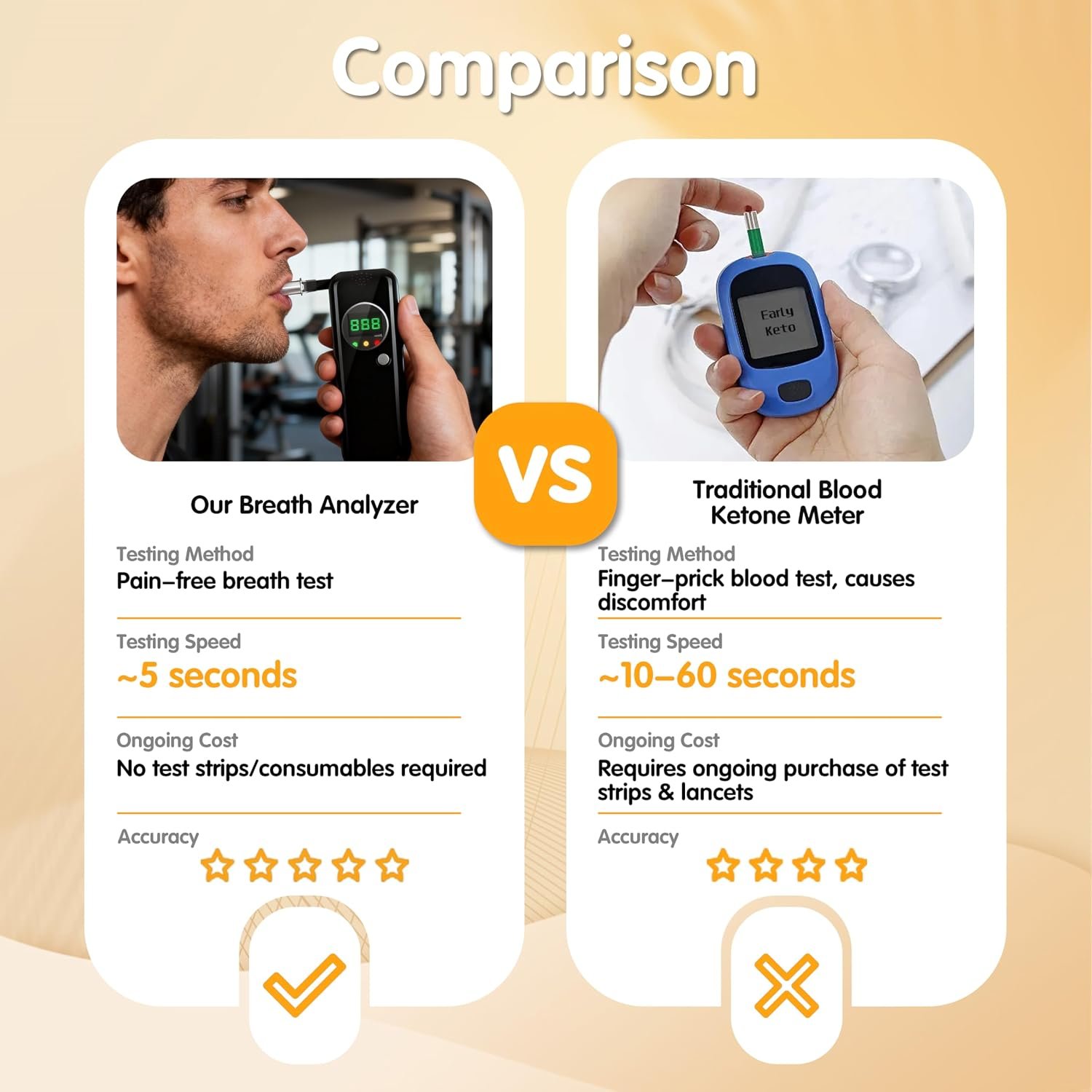
The Ketone Testing Meter listing claims a high-sensitivity sensor and accurate measurement, but the available product information provides no accuracy figures or supporting validation data. That makes the claim difficult to assess against other testing approaches. One source describes blood BHB as the most accurate measure of ketosis, while another says breath acetone testing is less accurate than measuring blood BHB.
A source reports an approximate 10-to-1 correlation between breath acetone and blood BHB, but that figure isn’t presented as a conversion validated for this product. It shouldn’t be used to translate the Ketone Testing Meter’s display into a blood result. Blood meters also have limitations: a source says capillary meters may overestimate ketosis or the absolute BHB amount, and another reports possible poor performance at high concentrations, including an Abbott meter becoming discrepant above mmol/L in a cited study. The evidence therefore doesn’t establish that either method is flawless, or quantify this product’s accuracy.
What features, test-strip requirements, and measurement ranges should you compare when choosing a ketone meter?
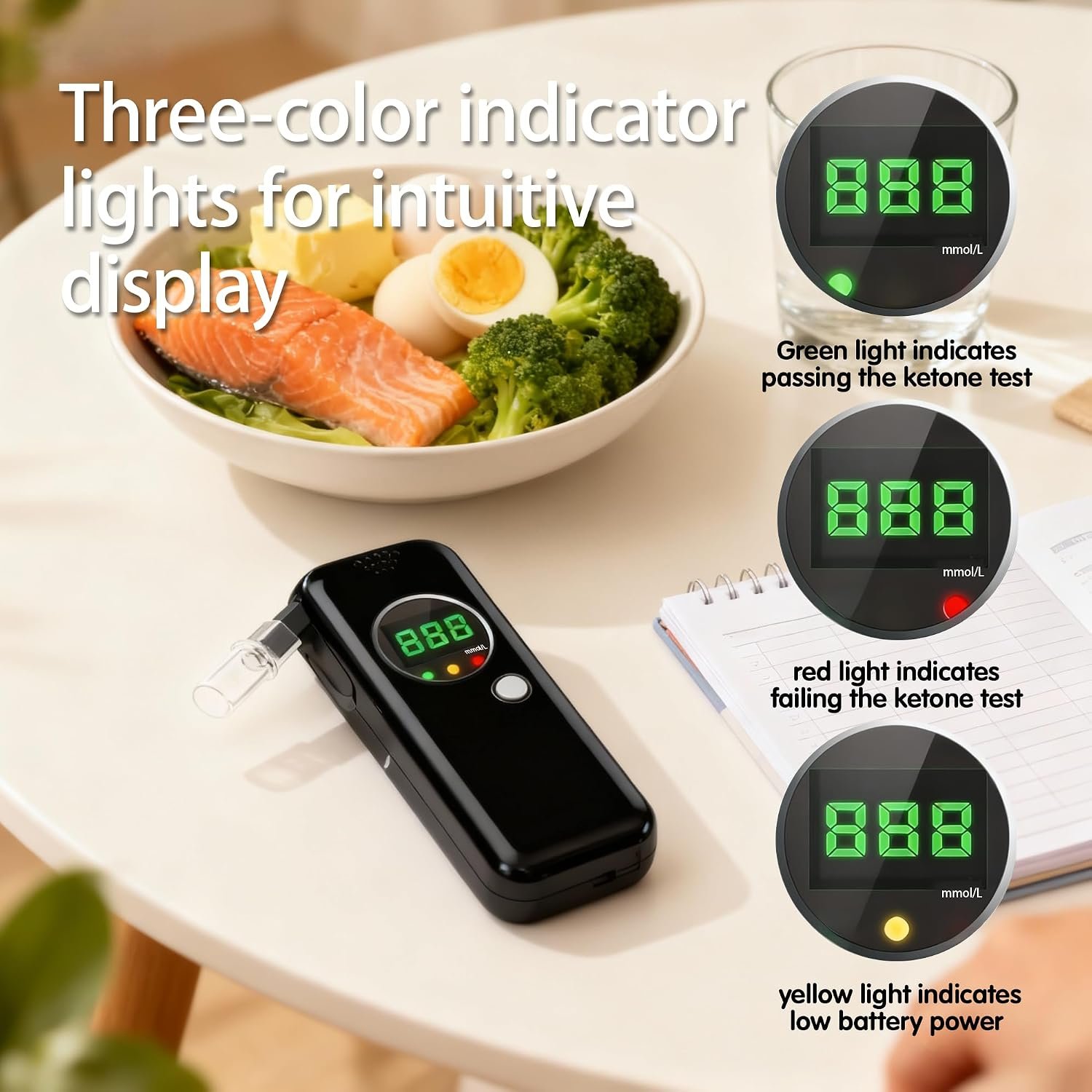
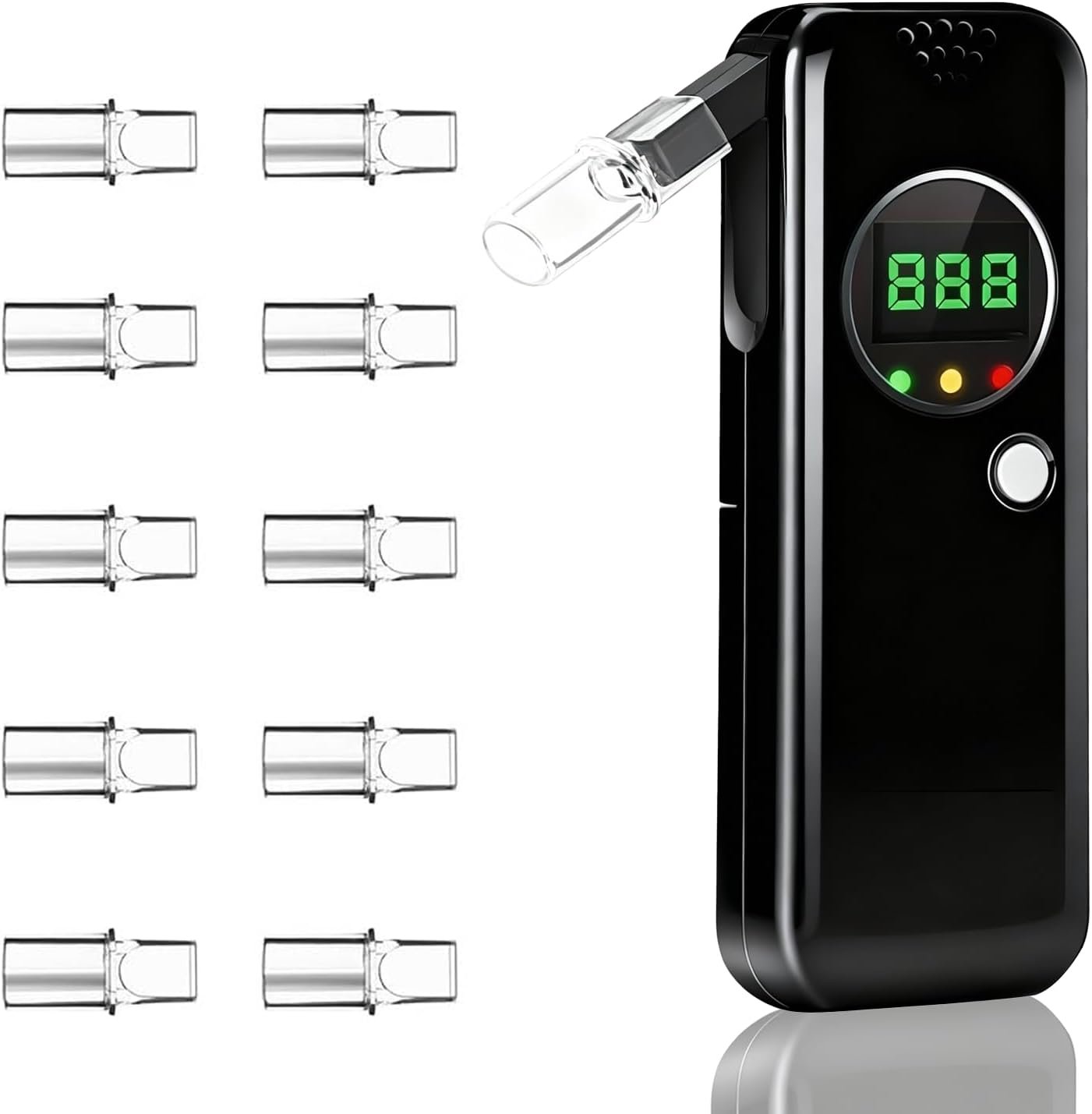
The Ketone Testing Meter listing describes a breath test, mmol/L display, claimed strip-free operation and a portable design. Listed package dimensions are 6.18 x 3.9 x 1.73 inches, and package weight is 3.53 ounces. These are package details, not a verified measurement of the device itself. The listing doesn’t provide a measurement range for this model. By comparison, another breath analyzer is described as measuring breath acetone from to ppm.
When comparing devices, consider accuracy, convenience, cost, strip requirements and whether recalibration is needed. The listing claims this device needs no strips or lancets, but gives no accuracy validation or recalibration details. Its display unit also doesn’t resolve how its breath reading relates to blood BHB. The Ketone Testing Meter may be convenient if you want to avoid finger-prick testing, but the available information doesn’t support judging its measurement range or the reliability of its result. Those are meaningful gaps if you need readings for health decisions.
How much do blood ketone meters and breath testers cost, including the ongoing cost of test strips?
The Ketone Testing Meter is listed for £34.11 and marked in stock. Its listing claims that it requires no ongoing test-strip or lancet purchases. That could simplify recurring supplies, but the available information doesn’t provide a test-strip price or a comparable purchase price for another meter. You can’t use this listing alone to calculate how its total cost compares with blood testing over time.
Another breath-analyzer approach is described as reusable by replacing its mouthpiece, rather than repeatedly buying strips. A separate source notes that frequent blood ketone testing may be costly and involves a finger prick. Those are general comparisons, not evidence of the ongoing cost of this particular product or a specific blood meter. The Ketone Testing Meter’s no-strip claim is a listing specification, not independent confirmation of long-term costs. No price for replacement mouthpieces, test strips or other meters appears in the available information, so those expenses remain unknown.

How do you use a blood ketone meter or breath tester correctly, and when should you take a reading?
The Ketone Testing Meter’s supplied guidance says to avoid food, drink, smoking and toothbrushing for minutes before a breath test. When “START” appears, blow for 5–6 seconds. The product recommends testing in the morning after waking, before consuming anything, and keeping conditions consistent. For first use, its guidance says to run the meter without blowing one or two times after the countdown finishes. Another source recommends waiting at least five minutes between tests.
Blood testing uses a different process: insert a ketone strip, prick a fingertip, apply blood to the strip and wait for the result. One source also describes sanitizing the fingertip before lancing it. For people with insulin-dependent diabetes, guidance says to test when blood sugar is over mmol/L (300 mg/dL). These instructions come from the cited sources; the listing doesn’t provide a full clinical testing protocol. The Ketone Testing Meter’s recommended morning timing is product guidance, not evidence that readings at other times are invalid.
What blood ketone levels indicate nutritional ketosis, and when can high ketones signal a medical emergency?
Sources give differing blood BHB ranges for ketosis: one describes 1–2.5 mmol/L as an ideal nutritional-ketosis range, while another gives 0.5–1.0 mM for lighter ketosis and 1.5–3.0 mM as an ideal level for weight loss. These are source-reported blood figures, not a single agreed interpretation. The Ketone Testing Meter displays breath-test results in mmol/L, but the available information doesn’t establish that its displayed values are interchangeable with blood BHB thresholds.
Diabetic ketoacidosis is described as a potentially fatal state involving high ketones alongside high blood glucose. A blood ketone result above 3.0 mmol/L is described as dangerous and requiring immediate medical care. Don’t apply that blood threshold directly to the Ketone Testing Meter’s breath display: the listing doesn’t explain a validated relationship between the two measurements. If you’re monitoring a medical condition, use the appropriate blood-testing and clinical guidance rather than treating an unexplained breath reading as equivalent to a blood result.
What symptoms can high ketone levels cause, and what should you do if a test shows a dangerously high reading?
The available sources don’t specify a particular list of symptoms for high ketones. They do say that high ketone production can make blood acidic and may lead to illness and danger to organs if it isn’t treated in time. For insulin-dependent diabetes, guidance recommends testing when a person is unwell and has symptoms of ketoacidosis.
A blood ketone result above 3.0 mmol/L is described as dangerous and requiring immediate medical care. Treat that as a blood-result threshold: the sources don’t establish that the Ketone Testing Meter’s breath mmol/L display can be read the same way. If you’re concerned about symptoms or a dangerously high blood result, seek medical care promptly rather than relying on this product’s unvalidated relationship to blood BHB. The product listing doesn’t provide a symptom checklist or emergency-care instructions, so those details remain unavailable in the supplied information.
Pros and Cons

Pros
- The listing claims breath testing without strips or lancets.
- The listing describes a portable design and gives package dimensions and weight.
- The product is listed in stock at £34.11.
Cons
- The available product information provides no supporting accuracy data.
- The listing provides no measurement range for this model.
- The relationship between its breath mmol/L display and blood BHB is not explained.
Final Verdict
| Source | Stated value | Context |
|---|---|---|
| ketone.com | 1.5–3.0 mM; 0.5–1.0 mM | ideal level for weight loss; lighter ketosis level |
| ketoketo.co | 1–2.5 mmol/L | ideal blood ketone range for nutritional ketosis |
| diabetes.co.uk | above 3.0 mmol/L | dangerous and requiring immediate medical care |
Key Takeaways
- The listing describes a breath test with an mmol/L display, but doesn’t explain its relationship to blood BHB.
- The product is listed at £34.11 and claims no ongoing strip or lancet costs.
- The listing provides no supporting accuracy data or measurement range for this model.
- A blood ketone result above 3.0 mmol/L is described as dangerous and requiring immediate medical care.
Frequently Asked Questions
How to monitor ketone levels?
You can monitor ketones with a blood meter or a breath tester, but they measure different substances: blood meters measure BHB and breath testers measure acetone. The product guidance recommends morning breath tests before consuming anything and under consistent conditions.
Do ketone breath testers work?
Breath testers measure acetone in exhaled breath, but one source describes breath testing as less accurate than blood BHB testing. This product claims accurate measurement, but the available listing provides no supporting accuracy data.
What does it feel like when ketones are high?
The available sources don’t specify particular symptoms. They report that high ketone production can make blood acidic and may lead to illness and organ danger if untreated.
What time of day is ketosis highest?
The available information doesn’t say when ketosis is highest. The product guidance recommends testing in the morning after waking, before consuming anything, and under consistent conditions.

