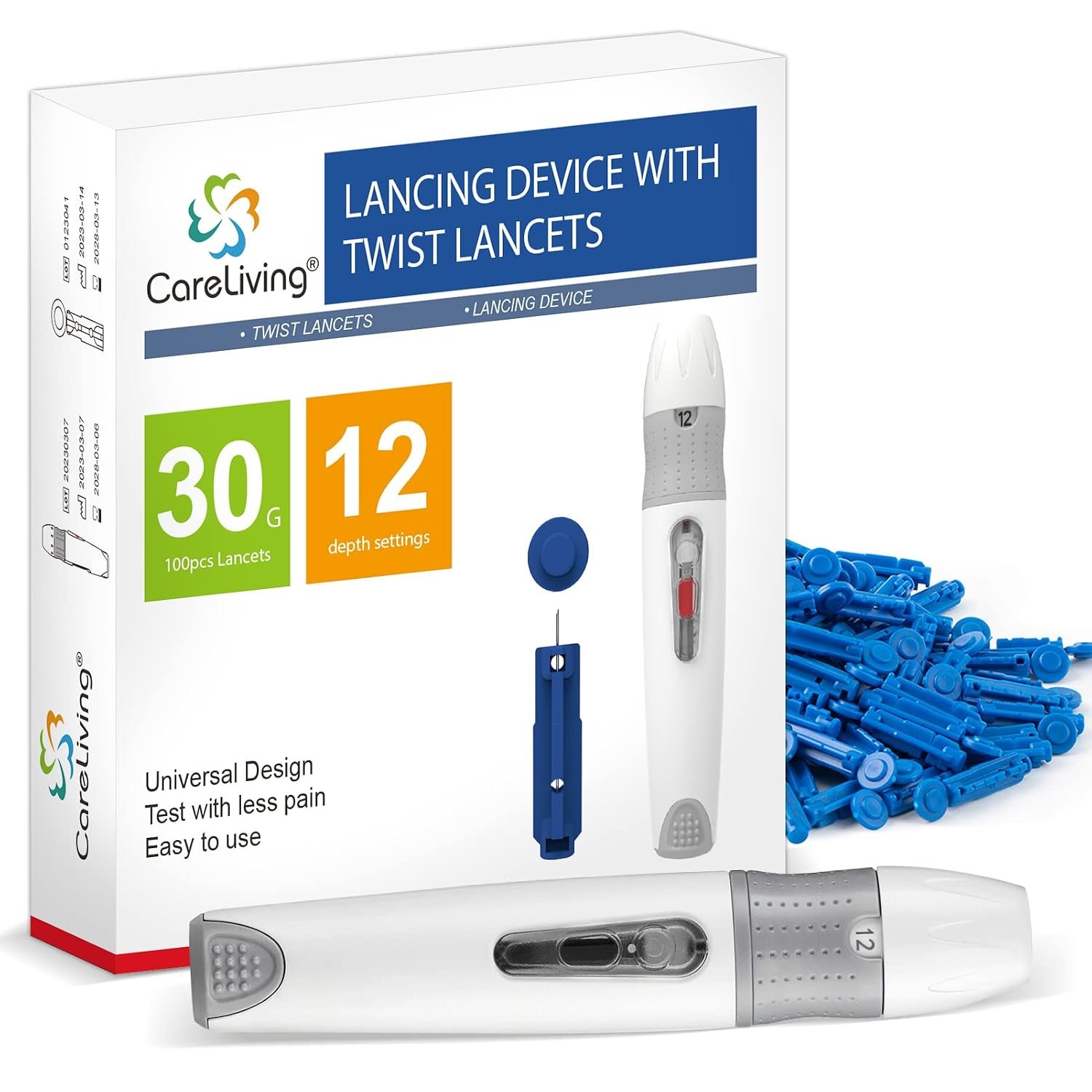
The Lancing Device and Lancets may suit you if you want a device-and-lancet set at the listed $7.99 price, but its compatibility with a particular device isn’t established by the listing. The pack includes one CARELIVING lancing device, 30-gauge lancets and a user guide; its depth settings and pain-related wording are listing claims, not independently verified results.
- The pack contains one CARELIVING lancing device, 30-gauge lancets and a user guide.
- The listing gives the lancets an outer diameter of 0.32 mm; this is a listing specification, not an independently verified measurement.
- The listing describes optional depth settings.
- The listing price is $7.99 for the device-and-lancet pack.

What is a lancing device, and what are lancets typically used for?
A lancet is a small needle used to obtain a blood sample, while a spring-driven lancing device pushes it into the finger and quickly retracts it. The device and lancet work together to collect a sample for diabetes testing. In this set, the listing specifies one CARELIVING lancing device, 30-gauge lancets and a user guide.
The Lancing Device and Lancets listing describes a complete set for obtaining blood samples, rather than a box of lancets alone. The phrase Lancing Device and Lancets also reflects the two main components: a reusable device and the supplied lancets, though the listing doesn’t establish the device’s expected lifespan. For diabetes testing, the Lancing Device and Lancets are intended to work together to collect a sample; the sources don’t establish that these lancets work with every meter or lancing system.
Do all lancing devices use the same type of lancet, or does compatibility depend on the device?
Lancing-device compatibility depends on the system: the listing says these lancets fit most standard systems, while another source notes that some devices use specialized designs rather than universal lancets. Accu-Chek FastClix is one example; the source says it limits lancet choice to its own brand.
That distinction matters when considering the Lancing Device and Lancets. “Most standard” is not the same as “all,” and the CARELIVING listing doesn’t name every supported device. The Lancing Device and Lancets should therefore not be assumed compatible with a specialized system just because that system uses lancets. If you use one, confirm its requirements with the device information before choosing the Lancing Device and Lancets. The available listing evidence makes a general compatibility claim, not a model-by-model compatibility list.

Which lancets are compatible with FreeStyle lancing devices?
The CARELIVING Amazon listing doesn’t identify a specific FreeStyle lancing-device model as compatible; it only makes a general claim about most standard systems. A separate listing for generic lancets says those lancets fit FreeStyle devices, including the Free Style ll device, but that is not evidence about the CARELIVING pack.
For that reason, don’t treat the separate generic-lancet claim as confirmation for the Lancing Device and Lancets. The Lancing Device and Lancets listing doesn’t name a FreeStyle model or provide a model-by-model compatibility chart. Before choosing the Lancing Device and Lancets for a particular FreeStyle device, check the requirements for that exact device. The listing’s broad standard-system wording doesn’t resolve whether a named FreeStyle model is included.
What features should I compare when choosing a lancing device for blood glucose testing?
Compare needle gauge, depth adjustment, how the lancet is loaded or discarded, and device compatibility. Gauge describes needle thickness, and a higher gauge number indicates a thinner needle. The CARELIVING listing specifies 30G lancets with an outer diameter of 0.32 mm and optional depth settings, but these are listing claims rather than results independently verified here. A source recommends 30G or 33G for people prioritizing comfort; that’s a recommendation, not a tested conclusion about this product.
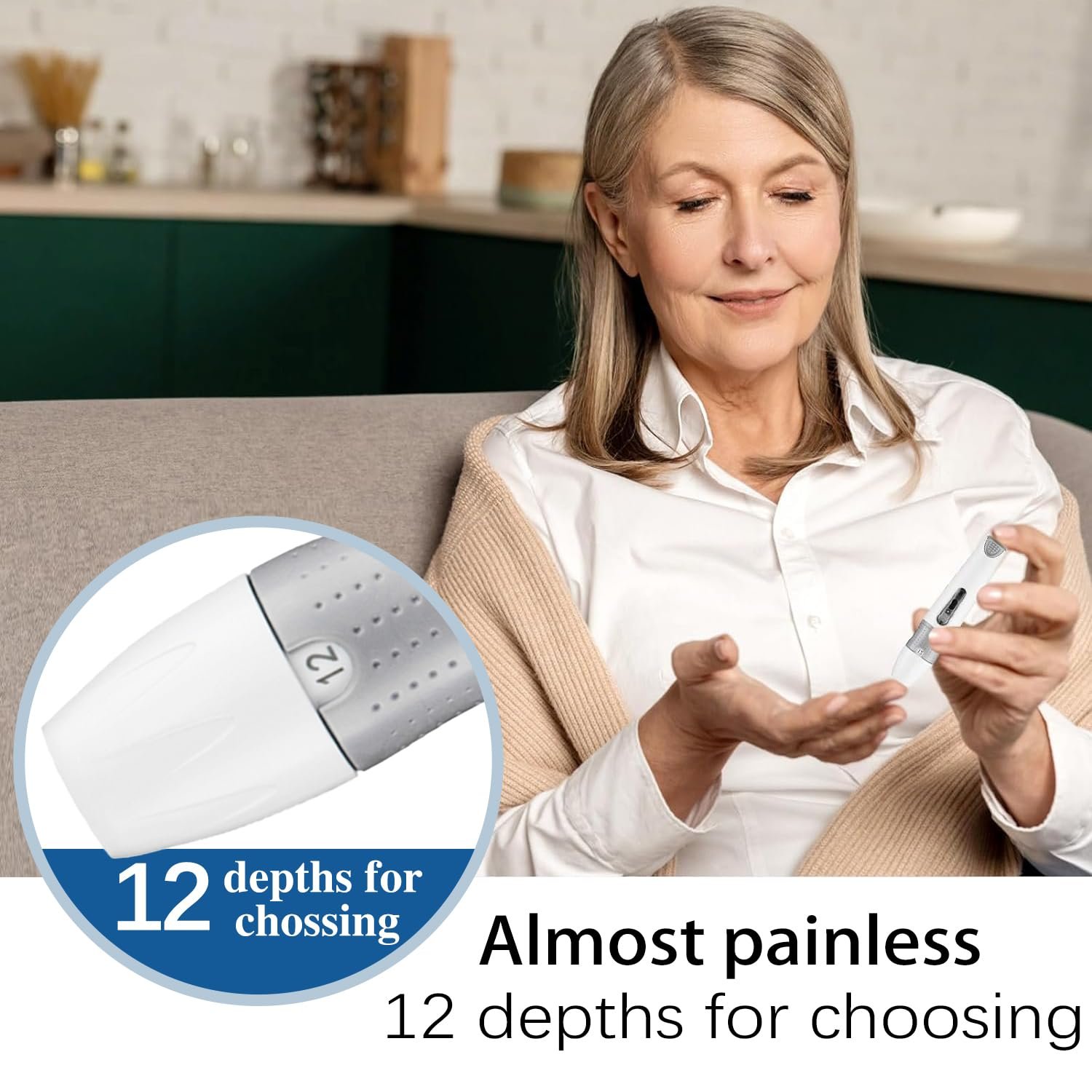
The Lancing Device and Lancets listing also describes a used-lancet ejector. Depth settings are another point of comparison: the listing claims 12, while a separate Vivaguard device is described as having five; this is a specification comparison, not a performance test. When considering the Lancing Device and Lancets, check whether its general compatibility claim covers your device, and note that detailed loading steps aren’t supplied in the cited product specifications. The Lancing Device and Lancets offers features to compare, but the available claims don’t establish which device will feel best for you.

How much do a lancing device and a box of lancets typically cost?
The CARELIVING listing gives a price of $7.99 for the device and lancets together. That is the listed price for this particular pack, not a typical market price, and the supplied evidence doesn’t give a separate price for lancets alone.
When comparing the Lancing Device and Lancets with other options, keep the contents in view: its listed pack includes one device, 30-gauge lancets and a user guide. A separate Cardinal Health product is described as containing sterile lancets, but no price is available for that product in the supplied evidence. So you can compare the stated CARELIVING price with the pack contents, but you can’t use these sources to calculate a market average or a like-for-like price comparison. The Lancing Device and Lancets price is a listing figure, not evidence of the usual cost of a box of lancets.
How do I load a lancet, adjust the depth, and safely use a lancing device?
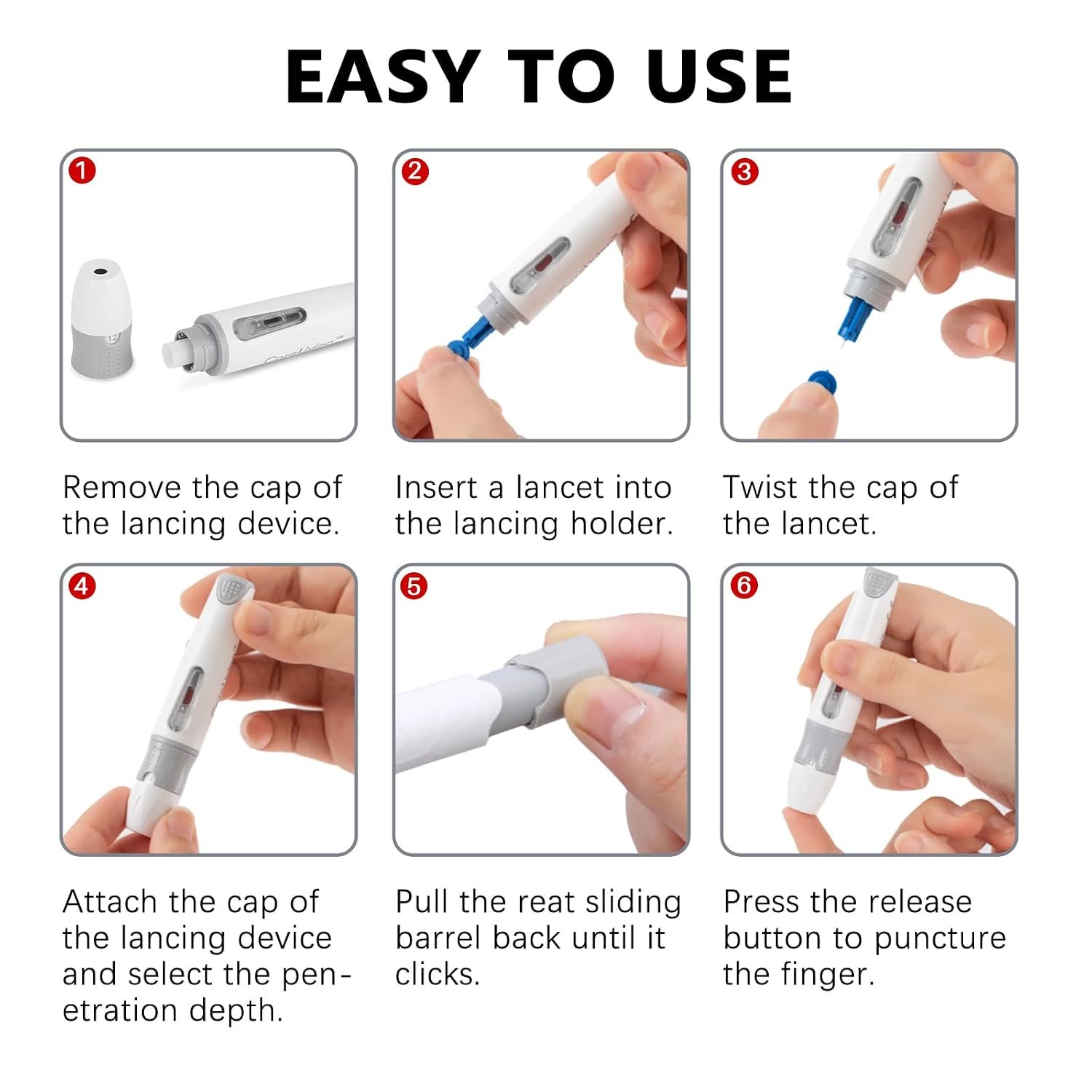
The CARELIVING listing describes adjustable depth settings and a mechanism to push out a used lancet, but the available product data doesn’t provide detailed loading instructions. For testing, the supplied guidance says to wash your hands with warm water, clean the site and let it dry completely, use the side of the fingertip rather than the pad, and rotate sites daily.
The Lancing Device and Lancets should be used according to the guide supplied with the product, since the listing data here doesn’t explain how to load its reusable device. The guidance says used lancets belong in a puncture-resistant sharps container. Don’t confuse the CARELIVING device’s lancet-loading process with instructions for a separate safety lancet: the cited safety-lancet directions are to remove its protective cap, place it on the puncture site and press. Those steps don’t establish how to load the Lancing Device and Lancets device.
How often should I change a lancet, and what risks come with reusing or sharing one?
The supplied guidance recommends replacing a lancet after each use. It also says reusing lancets can dull the needle and increase pain and infection risk. The sources provided don’t include separate guidance about sharing a lancet, so they don’t support adding a distinct sharing-specific risk here.
The Lancing Device and Lancets listing supplies lancets, but the pack quantity doesn’t change the recommendation to replace a lancet after use. The Lancing Device and Lancets should also be distinguished from safety lancets in another source: those are described as single-use and as automatically retracting and locking to prevent reuse, accidental sticks or cross-infection. Those safety-lancet features aren’t established for the CARELIVING lancets by the supplied listing data. Use the Lancing Device and Lancets according to its guide, and dispose of used lancets in a puncture-resistant sharps container.
Do I need a lancing device to use lancets, or can I prick my finger another way?
A lancet is described as a pointed steel instrument used to prick finger skin for a blood glucose test. Some safety lancets are designed to work without a separate lancing device and are intended for one-time use.
That alternative doesn’t establish that the CARELIVING lancets can be used on their own. The Lancing Device and Lancets pack is listed with one CARELIVING lancing device and lancets, but the supplied product details don’t say the lancets are standalone safety lancets. The Lancing Device and Lancets should therefore be considered a device-and-lancet set, not a confirmed device-free option. If you need lancets that don’t require a separate device, the available sources describe safety lancets as one alternative, but they don’t identify the CARELIVING pack as that type.

Pros and Cons
Pros
- The pack includes one CARELIVING device, 30-gauge lancets and a user guide.
- The listing specifies optional depth settings.
- The listing describes a mechanism for pushing out a used lancet.
Cons
- The listing doesn’t identify a specific FreeStyle model as compatible.
- The available product data doesn’t provide detailed lancet-loading instructions.
- The $7.99 figure applies to this listing; no typical market price or separate price for lancets is available.
Final Verdict
Key Takeaways
- Check compatibility with your specific device; the listing makes a general standard-system claim, not a universal one.
- Treat the 30G, 0.32 mm and 12-setting details as listing specifications, not independently verified results.
- The stated $7.99 is for this pack, and the evidence doesn’t establish a typical market price.
- Replace lancets after each use and dispose of used ones in a puncture-resistant sharps container.
Frequently Asked Questions
Do all lancing devices use the same lancets?
No. The CARELIVING listing says its lancets fit most standard systems, while some devices use specialized designs; Accu-Chek FastClix is cited as a system limited to its own brand.
Do I need a lancing device to use lancets?
Not always: some safety lancets are designed for use without a separate device and are intended for one-time use. The available evidence doesn’t establish that the CARELIVING lancets work without their listed device.
What is the best lancing device for diabetes testing?
The supplied evidence doesn’t identify one best device. It gives features to compare, including adjustable depth and compatibility, and describes the CARELIVING listing as having depth settings.
What lancets are compatible with FreeStyle lancing devices?
A separate generic-lancet listing says its lancets fit FreeStyle devices, including the Free Style ll, but the CARELIVING listing doesn’t name a specific compatible FreeStyle model. Confirm compatibility for your device.

