Turmeric and curcumin may affect blood sugar differently: turmeric has minimal impact from its low carbohydrate content, while clinical findings on curcumin supplements are mixed. A review of trials reported average reductions of 8.8 mg/dL in fasting blood glucose and 0.5% in HbA1c, but results varied, and the evidence does not establish one standard dose or show that turmeric can replace diabetes treatment.
- Turmeric is described as having minimal blood-sugar impact because of its low carbohydrate content.
- A review of clinical trials reported average reductions of 8.8 mg/dL in fasting blood glucose and 0.5% in HbA1c.
- A nine-month prediabetes trial studied mg of curcuminoids per day.
- Piperine from black pepper is reported to improve curcumin absorption and bioavailability.
How might turmeric affect blood sugar? Turmeric and Blood Sugar: Benefits, Limits and Dosage Questions
Turmeric and Blood Sugar: Benefits, Limits and Dosage Questions starts with a distinction between turmeric as food and curcumin supplements. Turmeric has minimal blood-sugar impact because of its low carbohydrate content, according to one source. Animal studies described in a review report possible improvements in beta-cell function and insulin resistance with curcumin, but those findings don’t establish a clinical benefit for people. Several trials in people with type diabetes found no blood-sugar benefit from turmeric or curcumin supplementation.
Early research suggests curcumin may affect insulin levels or insulin resistance, but further studies are needed to confirm those possible effects. For blood sugar management, Turmeric and Blood Sugar: Benefits, Limits and Dosage Questions should therefore be read as a question under investigation, not a promise of benefit. The phrase Turmeric and Blood Sugar: Benefits, Limits and Dosage Questions captures the evidence’s central limit: possible effects and mixed trial results don’t establish that turmeric treats diabetes.
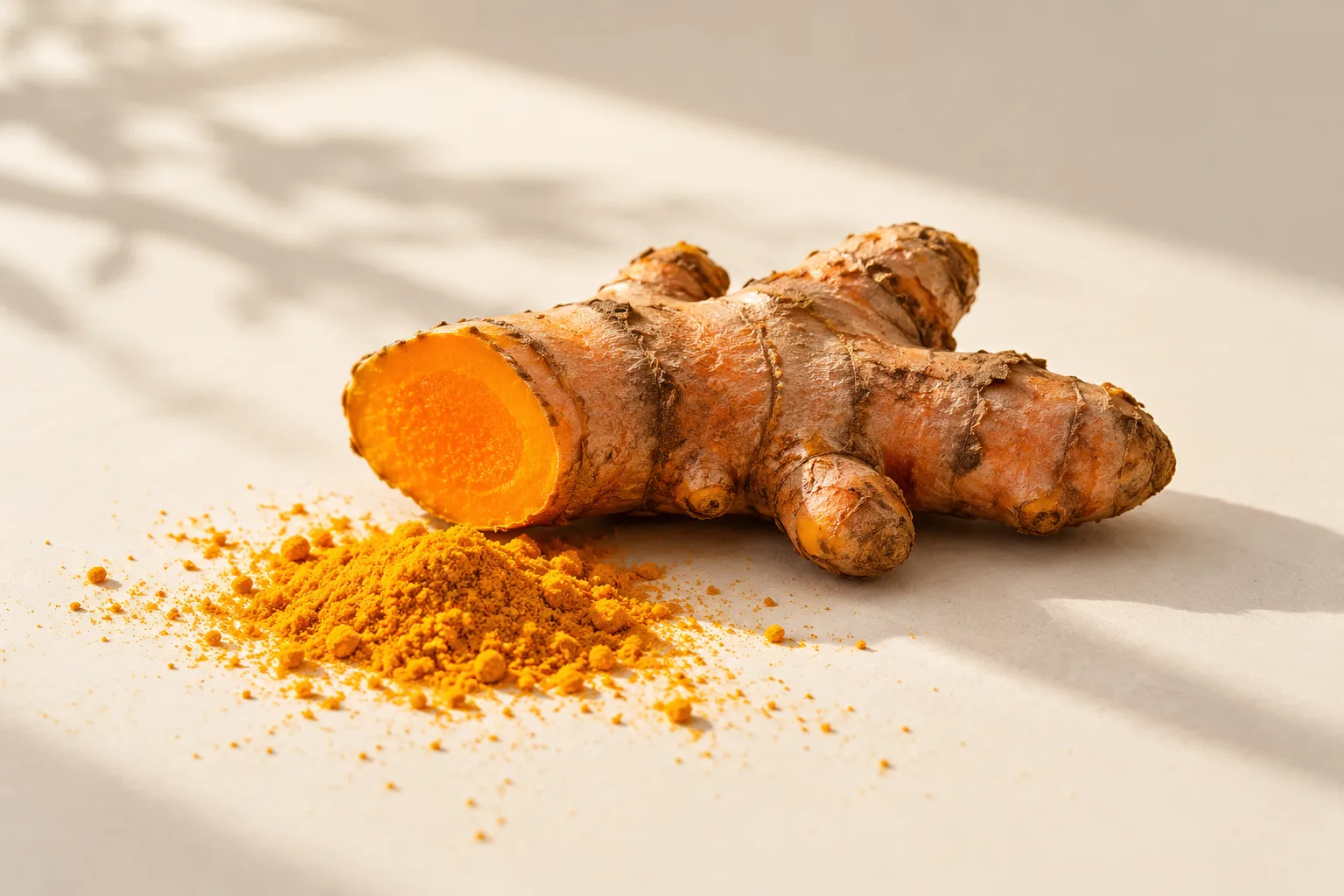
What does clinical research show about the size and duration of turmeric’s effects on blood sugar?
Clinical research on curcumin reports differing results across trial designs and durations. A review of trials reported average reductions of 8.8 mg/dL in fasting blood glucose and 0.5% in HbA1c, while noting that results varied among the trials. In a nine-month prediabetes trial, none of the curcumin-treated participants developed type diabetes, compared with 16.4% of the placebo group. A separate three-month trial reported reductions in C-peptide, HbA1c, and glucose compared with placebo.
Those findings concern trial outcomes, not a proven immediate effect after eating turmeric. One source reports no significant blood-sugar impact in the first minutes, no rise 30–60 minutes after consumption, and no impact at 2–3 hours. Turmeric and Blood Sugar: Benefits, Limits and Dosage Questions requires keeping these different time frames separate. Turmeric and Blood Sugar: Benefits, Limits and Dosage Questions also shouldn’t be taken as evidence that every person will see the trial averages.
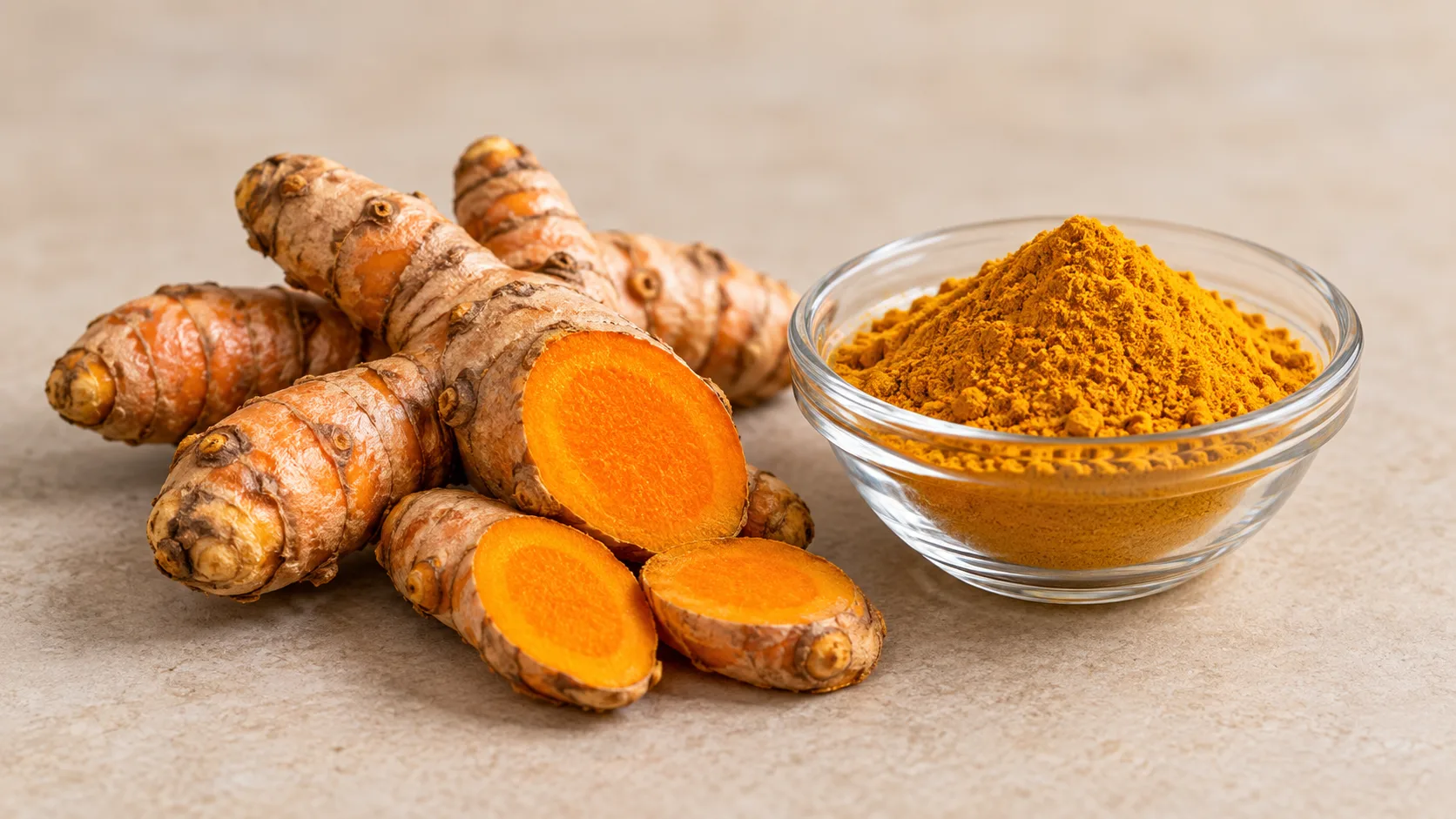
How much turmeric or curcumin has been studied, and how often is it taken?
Studies of curcumin for blood sugar have used a range of daily doses and durations. A nine-month prediabetes trial studied mg of curcuminoids per day. One three-month type diabetes trial studied mg of curcumin plus mg of piperine daily, while another three-month trial studied mg of curcumin daily. Across trials evaluating blood sugar and insulin changes, doses ranged from to 4,000 mg of curcumin per day; that range doesn’t establish a universally supported blood-sugar dose.
One article recommends 500–1,000 mg per day and suggests splitting doses above mg between morning and evening. Those are that article’s recommendations, not an established clinical standard. Turmeric and Blood Sugar: Benefits, Limits and Dosage Questions is a reminder to distinguish a source’s suggested dosage from doses tested in particular trials. Turmeric and Blood Sugar: Benefits, Limits and Dosage Questions can’t supply a personal dose: the evidence presented here doesn’t establish one.
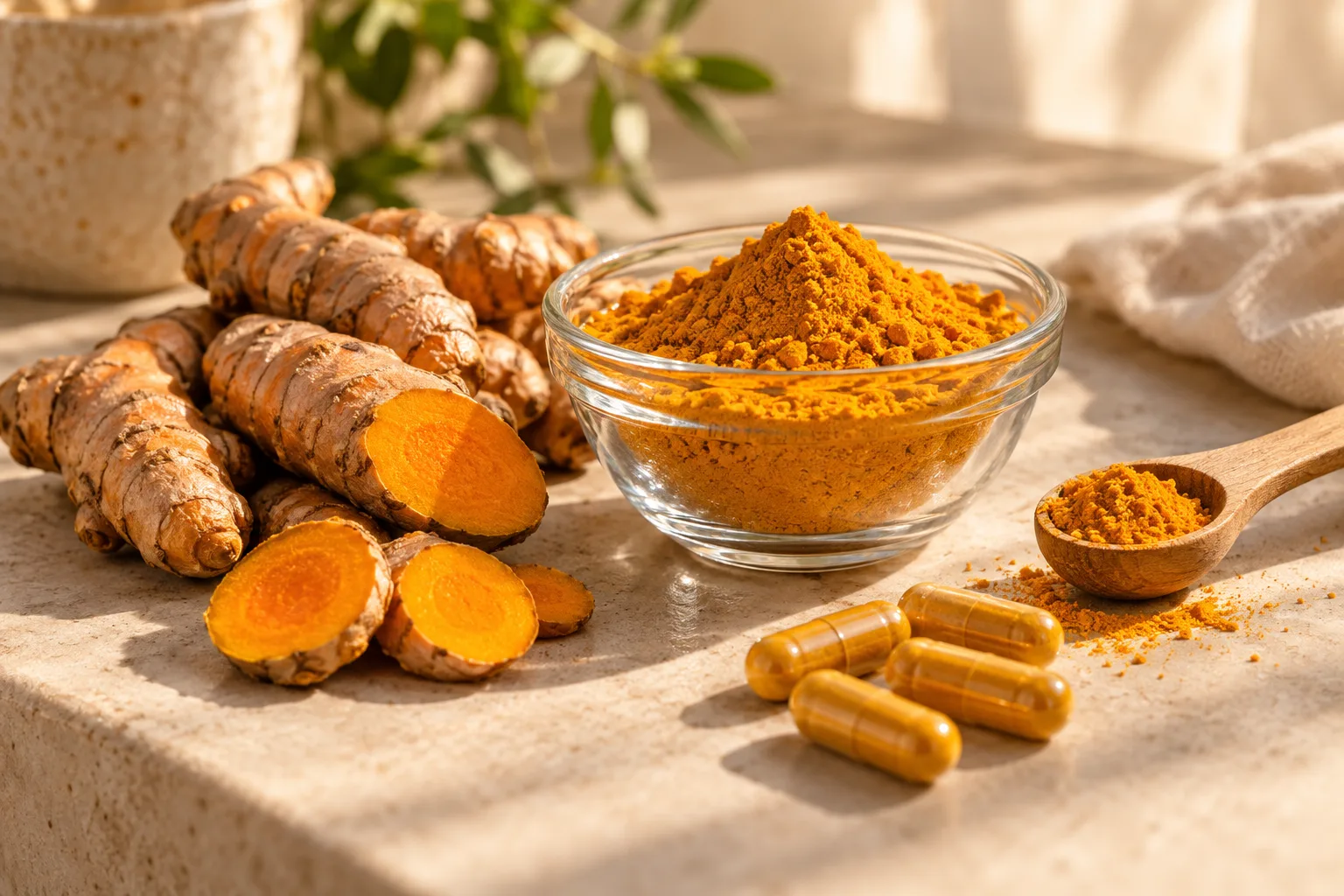
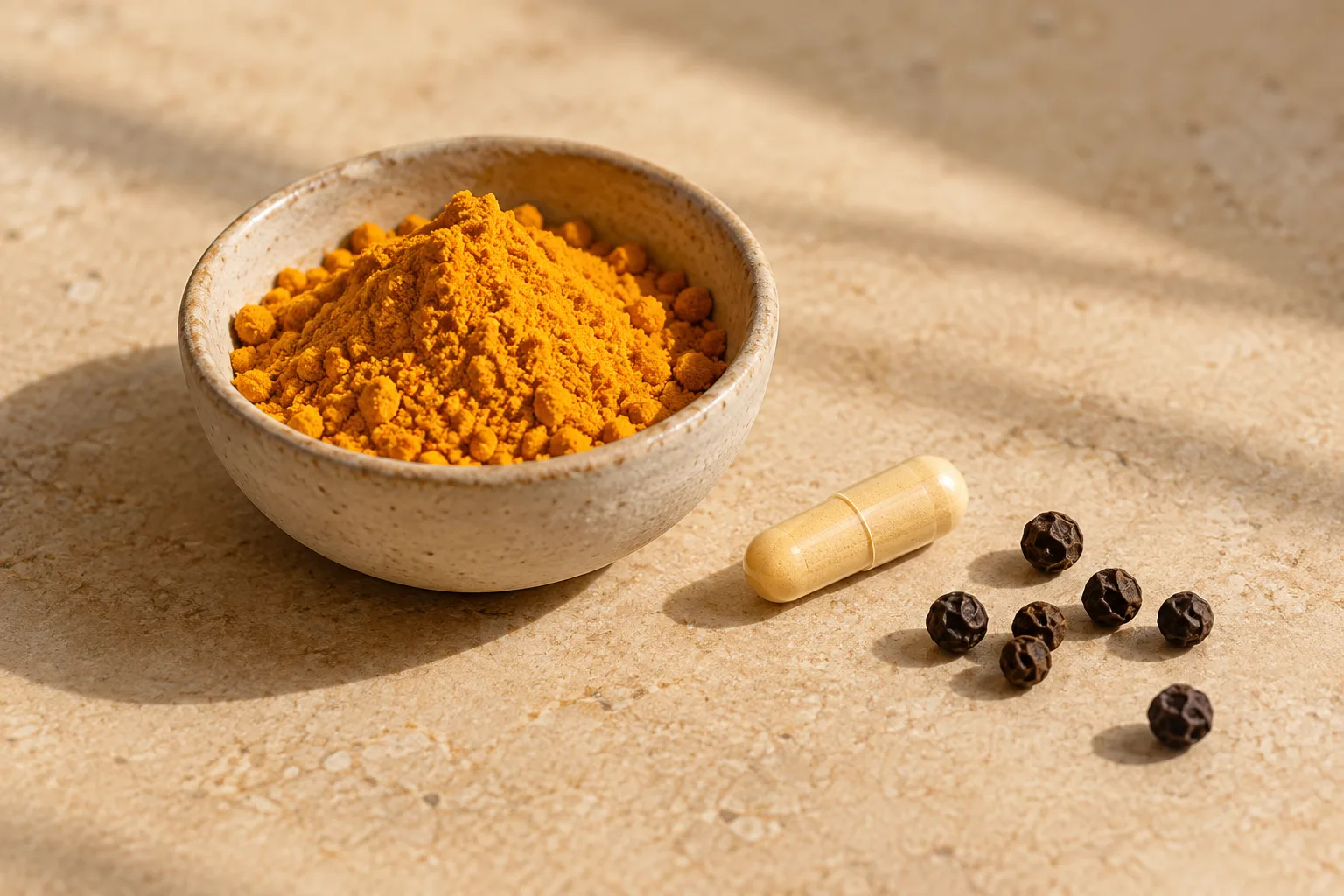
Does turmeric powder work like curcumin supplements, and does black pepper change absorption?
Turmeric powder and curcumin supplements aren’t interchangeable on the evidence provided. Curcumin is a bioactive molecule in turmeric, and a review reports low gastrointestinal absorption and rapid elimination. Whole turmeric powder is reported to contain 1–6% curcuminoids by weight, and a teaspoon is reported to provide roughly 50–100 mg of curcumin; concentrated extracts used in many trials commonly contain about 95% curcuminoids.
Piperine, a compound from black pepper, appears to improve curcumin absorption and bioavailability. One source reports increases of up to 2,000%, and describes a study using mg of piperine with grams of curcumin. These figures concern absorption, not proven blood-sugar benefit, and don’t show that powder and supplements have equivalent effects. Turmeric and Blood Sugar: Benefits, Limits and Dosage Questions is not a reason to assume an absorption claim guarantees a glucose outcome. Turmeric and Blood Sugar: Benefits, Limits and Dosage Questions depends on distinguishing formulation from demonstrated benefit.
What side effects, medication interactions, or health conditions make turmeric supplements risky?
Turmeric supplements can cause side effects, and some health conditions or medicines call for extra caution. High doses or long-term use may cause digestive upset; large curcumin doses have also been associated with nausea, headache, and skin rashes. One review does not recommend curcumin supplementation for pregnant or lactating women, children, or people with anaemia or liver disease because human safety studies are limited.
A source reports that curcumin may increase bleeding or bruising risk when combined with warfarin, aspirin, clopidogrel, or apixaban. Ask a healthcare provider before starting a supplement, especially if you take medication or have a health condition that could affect safety. Turmeric and Blood Sugar: Benefits, Limits and Dosage Questions includes safety as well as possible effects. Turmeric and Blood Sugar: Benefits, Limits and Dosage Questions doesn’t establish that supplements are suitable for everyone, so don’t treat a proposed dose as proof of safety.
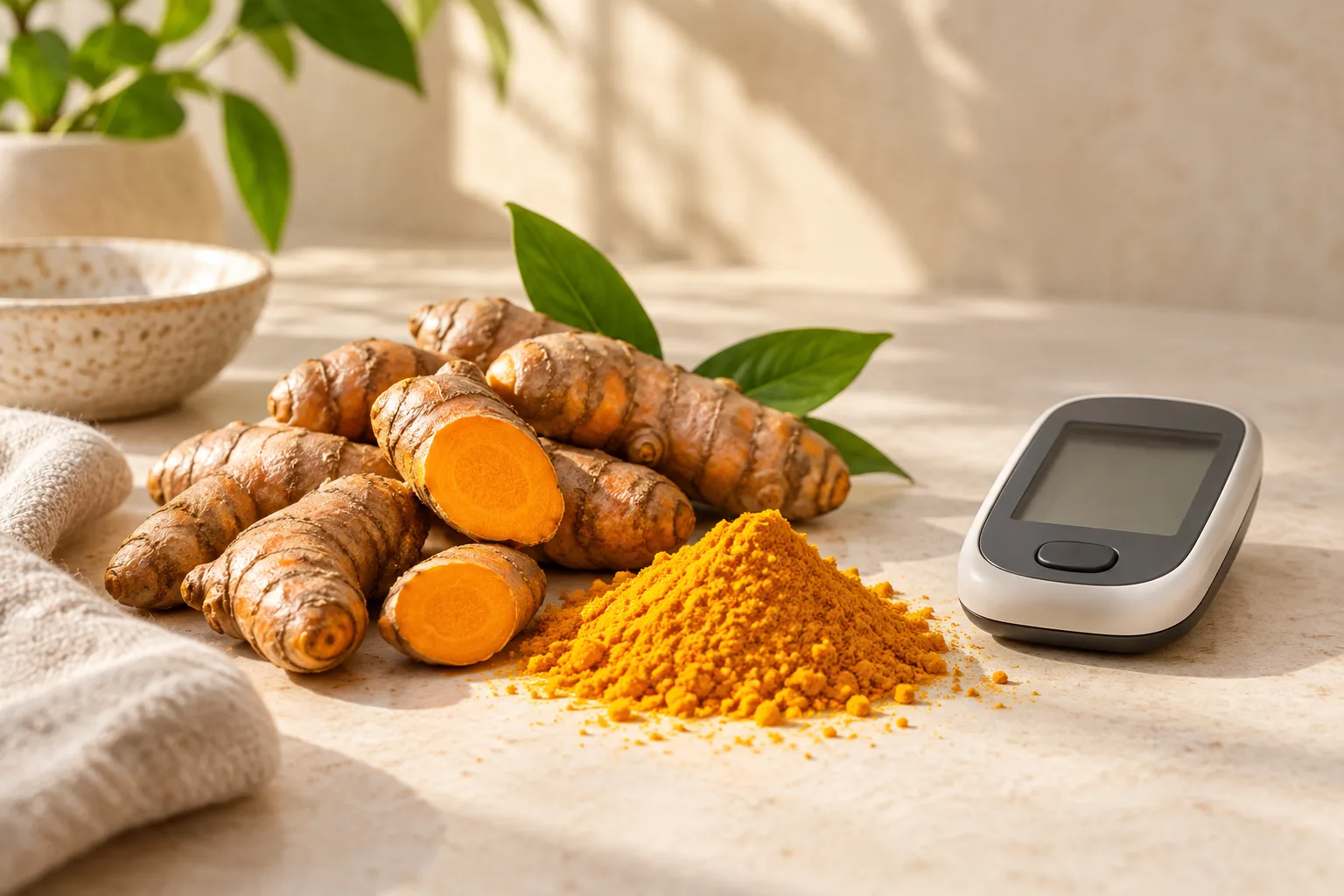
Can turmeric lower blood sugar enough to affect diabetes medicines or cause hypoglycemia?
Curcumin may affect blood sugar enough to matter when it’s combined with diabetes medicines, although the evidence here doesn’t establish how often this occurs. One source says curcumin can enhance the blood-sugar-lowering effects of diabetes drugs and potentially contribute to hypoglycemia. A 10-day study reported that curcumin supplementation attenuated hyperglycaemia in people with type diabetes who were treated with glyburide.
If you take insulin or an insulin-stimulating medicine such as a sulfonylurea, discuss curcumin with a doctor before using it. People taking metformin, insulin, glimepiride, or gliclazide are advised to monitor blood glucose closely and discuss curcumin with a healthcare provider. Turmeric and Blood Sugar: Benefits, Limits and Dosage Questions should not be read as a reason to change prescribed medication. Turmeric and Blood Sugar: Benefits, Limits and Dosage Questions leaves the individual risk and any monitoring plan for you and your healthcare provider to discuss.
How should I choose a turmeric supplement and read its curcumin label?
A turmeric supplement label should distinguish turmeric-root weight from curcuminoid content. One source says a label listing mg of turmeric root represents 25–50 mg of curcuminoids. By contrast, a mg turmeric extract standardized to 95% curcuminoids is reported to provide roughly mg of curcuminoids. These examples show why the amount of root alone doesn’t tell you how much curcuminoid a product contains.
One source argues that supplement evidence applies at the curcuminoid level and depends on an absorption route. Piperine is one reported way to improve absorption, but greater absorption doesn’t establish a blood-sugar dose or guarantee a benefit. Turmeric and Blood Sugar: Benefits, Limits and Dosage Questions means reading the stated curcuminoid amount rather than assuming root weight is equivalent. Turmeric and Blood Sugar: Benefits, Limits and Dosage Questions also doesn’t identify a product quality standard beyond the label details described here.
Should turmeric replace diabetes treatment, and how should blood sugar be monitored?
Turmeric or curcumin shouldn’t be treated as a replacement for prescribed diabetes treatment on the evidence available here. Clinical findings are mixed: several type diabetes trials found no blood-sugar benefit, while a review reported average reductions in fasting glucose and HbA1c, with results varying among trials. Discuss supplement use with a healthcare provider, and monitor blood glucose closely if you take medicines such as metformin, insulin, glimepiride, or gliclazide.
Research described here measures outcomes including fasting glucose and HbA1c, and one trial also reported changes in glucose and C-peptide. The claims provided don’t specify a monitoring schedule or a particular plan for post-meal testing. Turmeric and Blood Sugar: Benefits, Limits and Dosage Questions can help frame questions, but it doesn’t provide an individual treatment plan. Turmeric and Blood Sugar: Benefits, Limits and Dosage Questions should not replace discussion with a healthcare provider.
| Study or evidence summary | Population or evidence | Dose | Duration | Reported finding |
|---|---|---|---|---|
| Nine-month prediabetes trial | 240 people with prediabetes | 250 mg of curcuminoids per day | nine months | none of the curcumin-treated participants developed type diabetes, compared… |
| Three-month randomized trial | people with type diabetes | 500 mg of curcumin per day together with mg of piperine per day | three months | significant reduction in C-peptide, HbA1c, and glucose compared with placebo |
| Three-month trial | overweight or obese people with type diabetes | 300 mg of curcumin per day | three months | significant reductions in fasting glycaemia, insulin resistance, and HbA1c in… |
| 10-day study | people with type diabetes treated with glyburide | — | 10-day | curcumin supplementation attenuated hyperglycaemia |
| Review of clinical trials | 11 clinical trials | — | — | curcumin reduced fasting blood glucose by an average of 8.8 mg/dL and HbA1c by… |
Key Takeaways
- Treat trial results as mixed: some findings report reductions, while several type diabetes trials found no blood-sugar benefit.
- Compare curcuminoid content with turmeric-root weight when reading supplement labels.
- Discuss curcumin with a healthcare provider before use if you take glucose-lowering or blood-thinning medicines, or have a health condition that may affect safety.
- Don’t assume improved absorption from piperine establishes a blood-sugar dose or guarantees benefit.
Frequently Asked Questions
How might turmeric or curcumin affect blood glucose and insulin sensitivity in people with diabetes or prediabetes?
Turmeric has minimal blood-sugar impact because of its low carbohydrate content, while animal research reports possible improvements in beta-cell function and insulin resistance with curcumin. Several type diabetes trials found no blood-sugar benefit, and further research is needed on possible insulin effects.
What does clinical research show about the size and duration of turmeric’s effects on blood sugar?
A review of trials reported average reductions of 8.8 mg/dL in fasting blood glucose and 0.5% in HbA1c, but results varied. A nine-month prediabetes trial reported no progression among curcumin-treated participants, compared with 16.4% in the placebo group.
How much turmeric or curcumin has been studied for blood sugar control, and how often is it taken?
Trials studied 250–4,000 mg of curcumin per day, with examples including mg of curcuminoids daily for nine months and mg of curcumin daily for three months. The evidence doesn’t establish one universally supported blood-sugar dose.
Does turmeric powder have the same effects as curcumin supplements, and does taking it with black pepper change absorption?
The evidence doesn’t establish equivalent effects for powder and supplements. Piperine from black pepper appears to improve curcumin absorption and bioavailability, but absorption findings don’t prove a blood-sugar benefit.
What side effects, medication interactions, or health conditions make turmeric supplements risky?
High doses or long-term use may cause digestive upset, and large curcumin doses have been associated with nausea, headache, and skin rashes. A source also reports possible increased bleeding or bruising with warfarin, aspirin, clopidogrel, or apixaban.
Can turmeric lower blood sugar enough to affect diabetes medications or cause hypoglycemia?
Curcumin may enhance the blood-sugar-lowering effects of diabetes drugs and potentially contribute to hypoglycemia. People taking insulin or insulin-stimulating medicines are advised to discuss curcumin with a doctor.
How should someone choose a turmeric supplement, and what quality or curcumin-content information should the label provide?
Compare turmeric-root weight with stated curcuminoid content: one source says mg of turmeric root represents 25–50 mg of curcuminoids, while mg of extract standardized to 95% provides roughly mg.
Should turmeric replace prescribed diabetes treatment, and how can blood sugar be monitored when adding a supplement?
The mixed clinical findings don’t establish turmeric as a replacement for prescribed treatment. Discuss supplement use with a healthcare provider and monitor blood glucose closely if you take medicines such as insulin or metformin.
